Image

European Painting

Ahmanson Building, Level 3: Artworks on view

Especially renowned for its representation of Italian baroque painting and Dutch painting from the Golden Age, our European painting collection comprises works ranging from the twelfth to the early twentieth century and surveying all major styles, from medieval Gothic to impressionism. Among the many masterpieces are Georges de La Tour’s Magdalen with the Smoking Flame (c.1638–40), Rembrandt van Rijn’s Raising of Lazarus (c.1630), Edgar Degas’s The Bellelli Sisters (1862–64), and Paul Cézanne’s Sous-Bois (1894).

Georges de la Tour

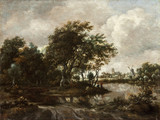
Sous-Bois
Paul Cézanne
c. 1894
The Bellelli Sisters (Giovanna and Giuliana Bellelli)
Edgar Degas
1865–1866
The Raising of Lazarus
Rembrandt Harmensz. van Rijn
c. 1630
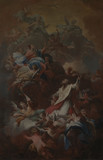
Allegory of Salvation with the Virgin and Christ Child, St. Elizabeth, the Young St. John the Baptist and Two Angels
Rosso Fiorentino Giovanni Battista di Jacopo
c. 1521

The Magnificent Eleven

Does the focus on blockbuster temporary exhibitions cause us to miss treasures found in our own permanent collections? The Los Angeles Times posed this very question to a dozen curators and art specialists who then composed a list of the best museum pieces throughout the region. Eleven artworks were chosen from the Los Angeles County Museum of Art. Profoundly varied, pieces range from the ancient to the contemporary. We call them the Magnificent Eleven.

Using LACMA’s Free Image Library

At a family wedding in Seattle, I met the grandmother of the bride, Elaine—an artist with a love of European painting. After some small talk, I discovered that Elaine’s daughter-in-law had recently visited LACMA and quickly fell in love with Portrait of Madame Paul Duchesne-Fournet, by Jean-Jacques Henner. Upon returning home, this daughter-in-law found a small image of the painting and forwarded it to Elaine—with the desire to have her paint a full-size oil of it...

The Dashing Second Lieutenant

The viewing of art is, in most cases, a deeply private adventure, and so it was for me upon my first time really seeing Baron Antoine-Jean Gros’ Portrait of Second Lieutenant Charles Legrand. I first viewed the painting not in its majestic place on the third level of the Ahmanson Building but in a small book about Romanticism by Norbert Wolf that I picked up after leaving a wonderful exhibition featuring English Romantic-era painters at the Tate Britain. Not only was Romanticism the most elusive and diffuse of all the art movements, but the word itself fell into a vast no-man’s land. Magically, this is where my adventure began—with the Romantic movement and Baron Gros’ masterpiece...

Video