Children of the Plumed Serpent: The Legacy of Quetzalcoatl in Ancient Mexico
Children of the Plumed Serpent: The Legacy of Quetzalcoatl in Ancient Mexico
Children of the Plumed Serpent: the Legacy of Quetzalcoatl in Ancient Mexico follows the historical trajectory of the life and epic stories of the culture-hero and deity, Quetzalcoatl. The exhibition examines the art and material objects of late pre-Columbian and early colonial societies across Mexico to explore Quetzalcoatl’s role as founder and benefactor of the Nahua-, Mixtec-, and Zapotec-dominated kingdoms of southern Mexico. These socially and culturally complex communities successfully resisted both Aztec and Spanish subjugation, flourishing during an era of unprecedented international entrepreneurship and cultural innovation. On view are painted manuscripts (codices), polychrome ceramics, textiles, and exquisite works of gold, turquoise, and shell that reflect the achievements of the Children of the Plumed Serpent.
Introduction | The World of Tula and Chichen Itza | The New Tollan | Feasting, Divination, and Heroic History | Avenues of Trade and the Spread of the International Style | The Aztec Conquest and the Spanish Incursion
This exhibition was organized by the Los Angeles County Museum of Art and made possible by the National Endowment for the Humanities. It was supported by the National Endowment for the Arts, the Ethnic Arts Council of Los Angeles, and by an indemnity from the Federal Council on the Arts and the Humanities.

The Los Angeles presentation was made possible in part by LACMA’s Wallis Annenberg Director’s Endowment Fund.
The organizers are grateful for the special collaboration of the National Council for Culture and the Arts (CONACULTA), Mexico, and the National Institute for Anthropology and History (INAH), Mexico.

Highlighted Objects, Links
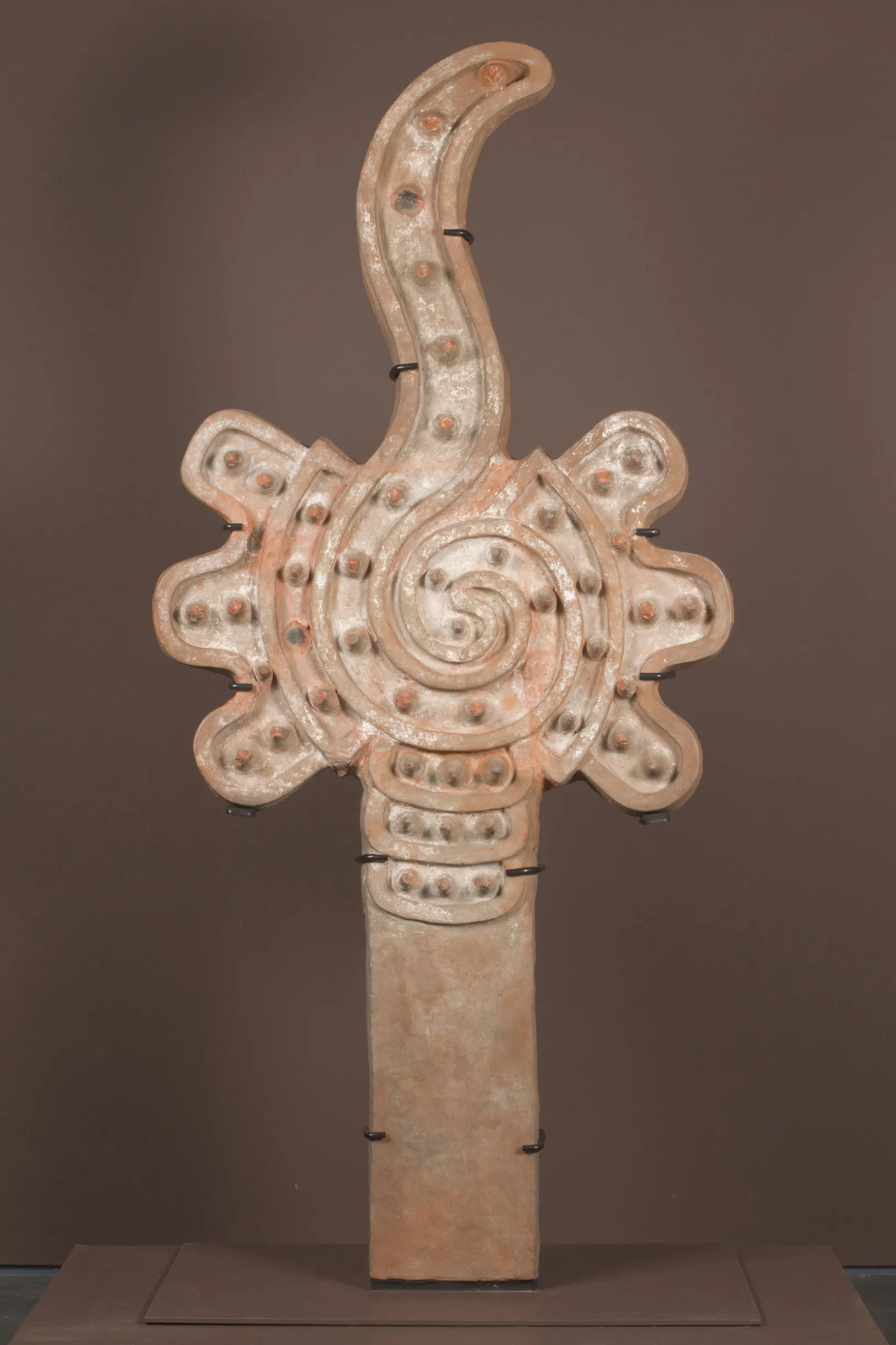
Architectural Ornament in the Form of a Cut Shell, Mexico, Tenochtitlan, 1400–1521, Museo del Templo Mayor, Mexico City, photo © Instituto Nacional de Antropología e Historia (CONACULTA-INAH-MEX).
- Apr 1–Jul 1, 2012
- Resnick Pavilion
This exhibition was organized by the Los Angeles County Museum of Art and made possible by the National Endowment for the Humanities. It was supported by the National Endowment for the Arts, the Ethnic Arts Council of Los Angeles, and by an indemnity from the Federal Council on the Arts and the Humanities.
The Los Angeles presentation was made possible in part by LACMA’s Wallis Annenberg Director’s Endowment Fund.
The organizers are grateful for the special collaboration of the National Council for Culture and the Arts (CONACULTA), Mexico, and the National Institute for Anthropology and History (INAH), Mexico.
Highlighted Objects, Links
Architectural Ornament in the Form of a Cut Shell, Mexico, Tenochtitlan, 1400–1521, Museo del Templo Mayor, Mexico City, photo © Instituto Nacional de Antropología e Historia (CONACULTA-INAH-MEX).
Media
Curator Victoria Lyall talks about the legacy of Quetzalcoatl, the extraordinary works of art in the exhibition, and particularly the rare codices on view.
Unframed Blog Posts
— Los Angeles Times
— Los Angeles Times