Pablo Picasso—Portraits in Disguise
- Dates: Jun 12–Dec 6, 2026
- Location: BCAM, Level 3
The human figure was Pablo Picasso’s favorite subject, and portraiture remained a constant throughout his career. Drawing from his personal life, he depicted lovers, friends, rivals, and himself in whichever pictorial language occupied him at the moment, from the fractured planes of Cubism to the expressive gestures of his late work.
This selection of works reveals how many of Picasso’s portraits operate in disguise. Rather than depicting his subjects directly, he often embedded their identities in symbolic form: a profile suggested by negative space, a distinctive article of clothing, or an archetype charged with private meaning. Picasso likewise inserted himself into his work through recurring alter egos. Of these, the harlequin, a master of transformation, became Picasso’s most enduring surrogate, mirroring an artist who moved fluidly across identities and styles.
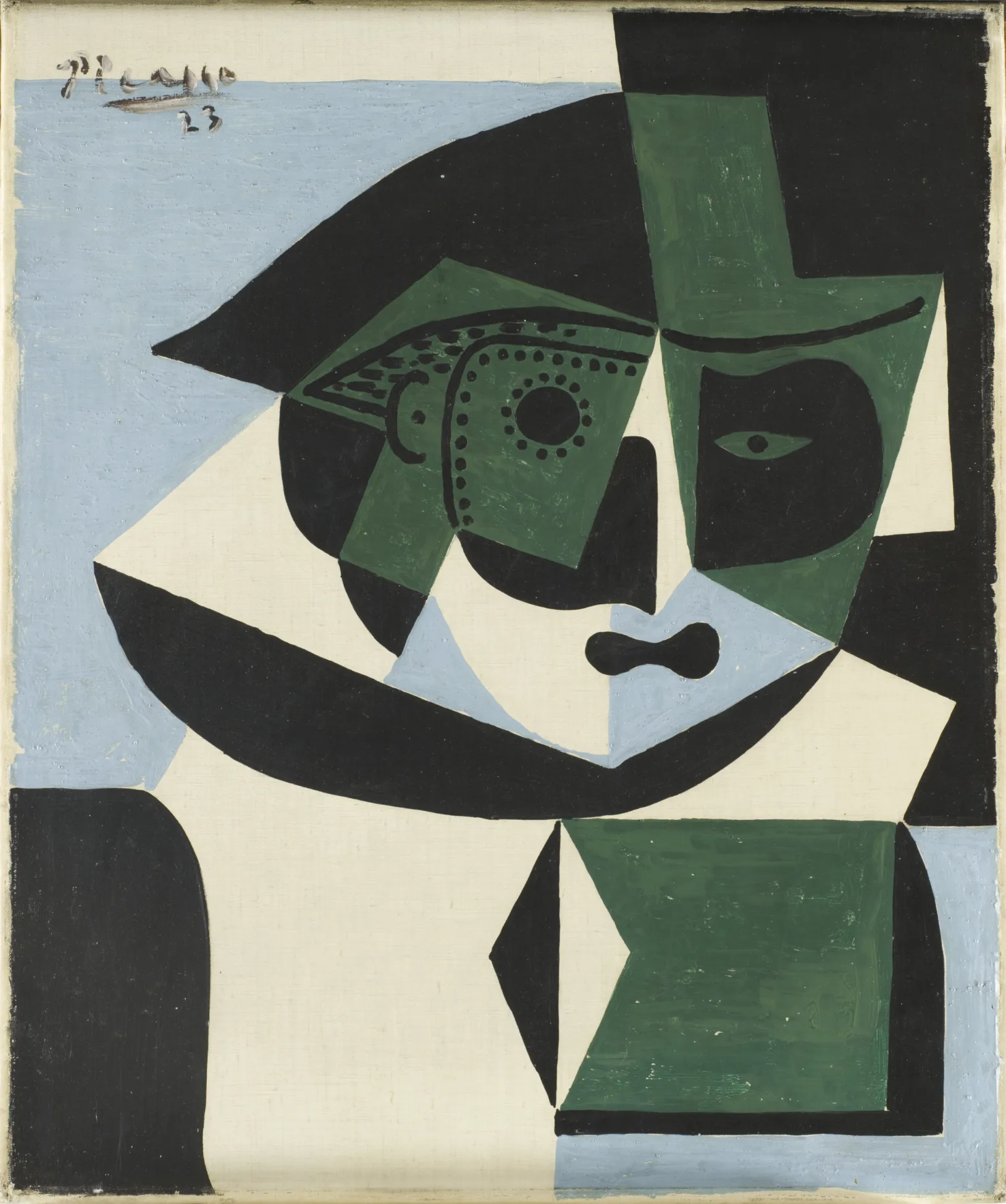
Pablo Picasso, Harlequin, 1923, Los Angeles County Museum of Art, partial, fractional and promised gift of Janice and Henri Lazarof, © Estate of Pablo Picasso/Artists Rights Society (ARS), New York, photo © Museum Associates/LACMA
Support
This installation was organized by the Los Angeles County Museum of Art.