Bubbles
Audio Available
Listen to artist Barba Rosa discuss this installation in depth.
Mouth Piece (for a collection of objects), 2020
Para esta comisión, el artista compuso un grupo de canciones a partir de los sonidos y tonos de ocarinas y silbatos precolombinos de la colección de LACMA (exhibidos en esta galería). Pieza de boca está interpretada por Alethia Lozano, flautista principal de la Orquesta Sinfónica Nacional de México. Presentada como “rayos de sonido direccionalizados”, como dice Chacon, las canciones cuentan historias sobre otros objetos sin sonido de la exhibición e invitan a los oyentes a alinear sus propias voces con la actividad cumulativa en la galería.
Mouth Piece (for a collection of objects), 2020
Audio Available
Listen to artust Raven Chacon discuss this installation in depth.
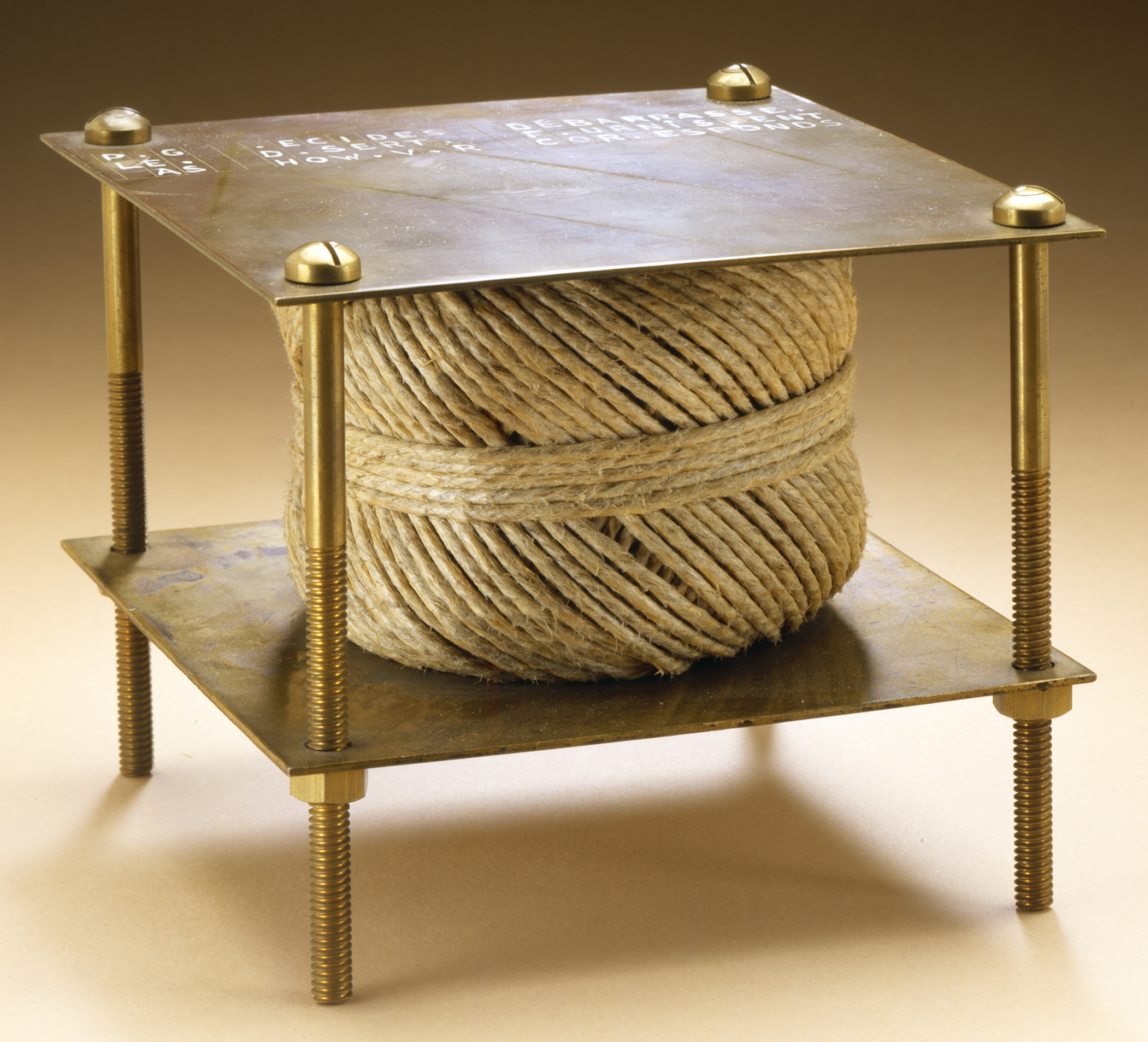
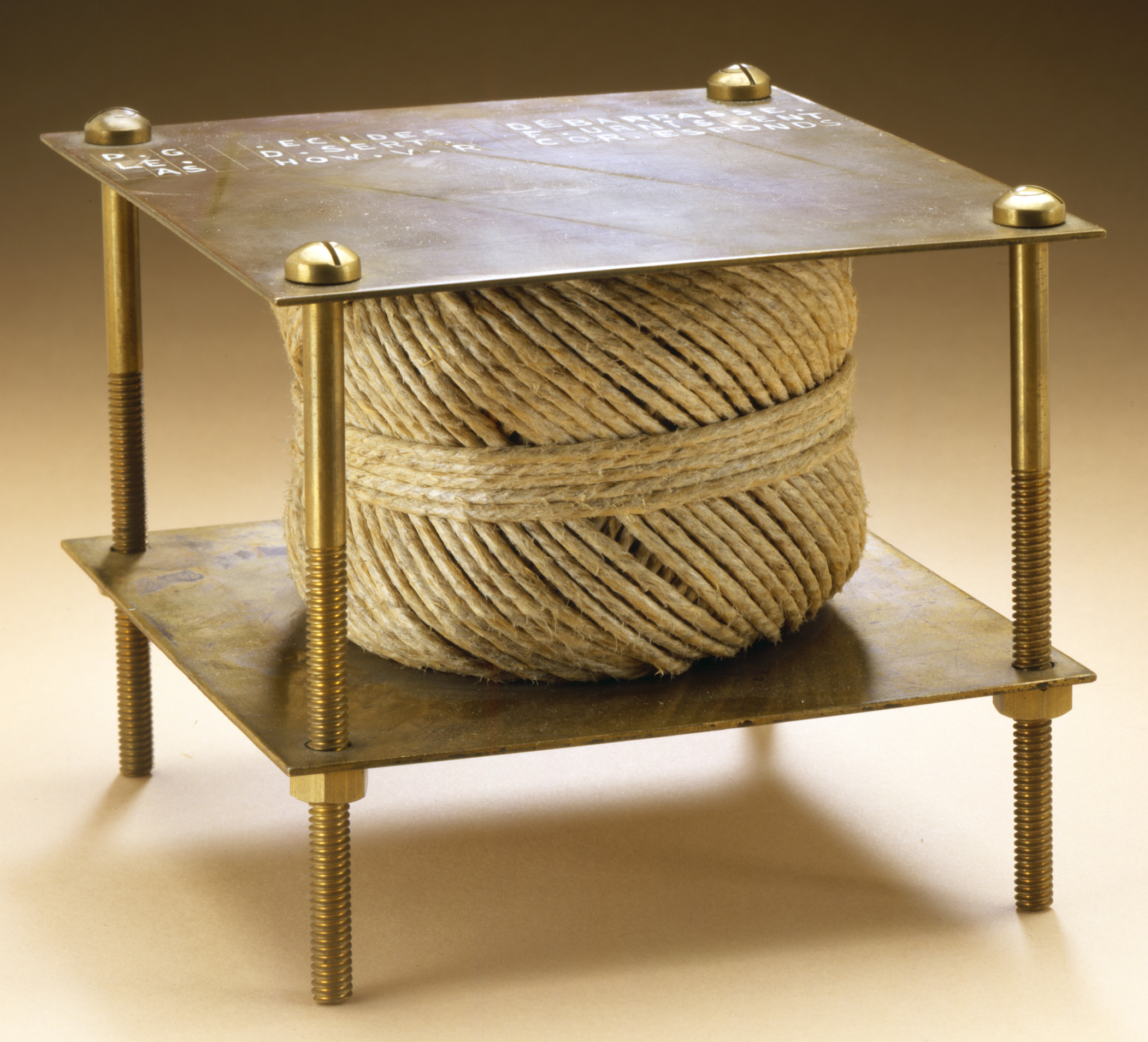
Kikoemasu ka? (Can you hear me?), 1980
Linda Nishio, Kikoemasu ka? (Can you hear me?), 1980, Los Angeles County Museum of Art, Ralph M. Parsons Fund, © Linda Nishio, photo © Museum Associates/LACMA
Word for Word: extension for dissolution/Twain and Borges, 2017
Jorge Luis Borges toma un párrafo de La vida en el Misisipi (1833) de Mark Twain para su cuento El atroz redentor Lazarus Morell (1935). El párrafo describe el río Misisipi como un caudal que expande el continente de Norteamérica hasta el Golfo de México. Sin embargo, Borges reemplaza la palabra “expansión” por la palabra “disolución”. En su versión del cuento, el Misisipi no “extiende” América hasta el Golfo, sino que la convierte en “un continente de perpetua disolución”.
Word for Word: extension for dissolution/Twain and Borges, 2017
Jorge Luis Borges lifts a paragraph from Mark Twain’s Life on the Mississippi (1833) for his story "The Cruel Redeemer Lazarus Morell" (1935). The paragraph depicts the Mississippi River expanding the North American continent into the Gulf of Mexico. Borges, however, replaces the word “expansion” with “dissolution.” In his version of the story, the Mississippi does not “extend” America into the Gulf, but becomes “a continent in perpetual dissolution.”
Flaubert Letters III, 1987/2012
Estos objetos de cristal poseen extractos de la correspondencia entre los escritores y amantes franceses Gustave Flaubert y Louise Colet. Mientras las cartas de Flaubert han sido ampliamente publicadas, las de Colet no alcanzaron la posteridad. Bloom comenzó a trabajar en este proyecto en 1987. La artista re-escribió las epístolas perdidas de Colet y las talló en cristal en su propia caligrafía. La voz de Flaubert, en cambio, fue escrita por un amigo de la artista.