Calder and Abstraction: From Avant-Garde to Iconic
Calder and Abstraction: From Avant-Garde to Iconic
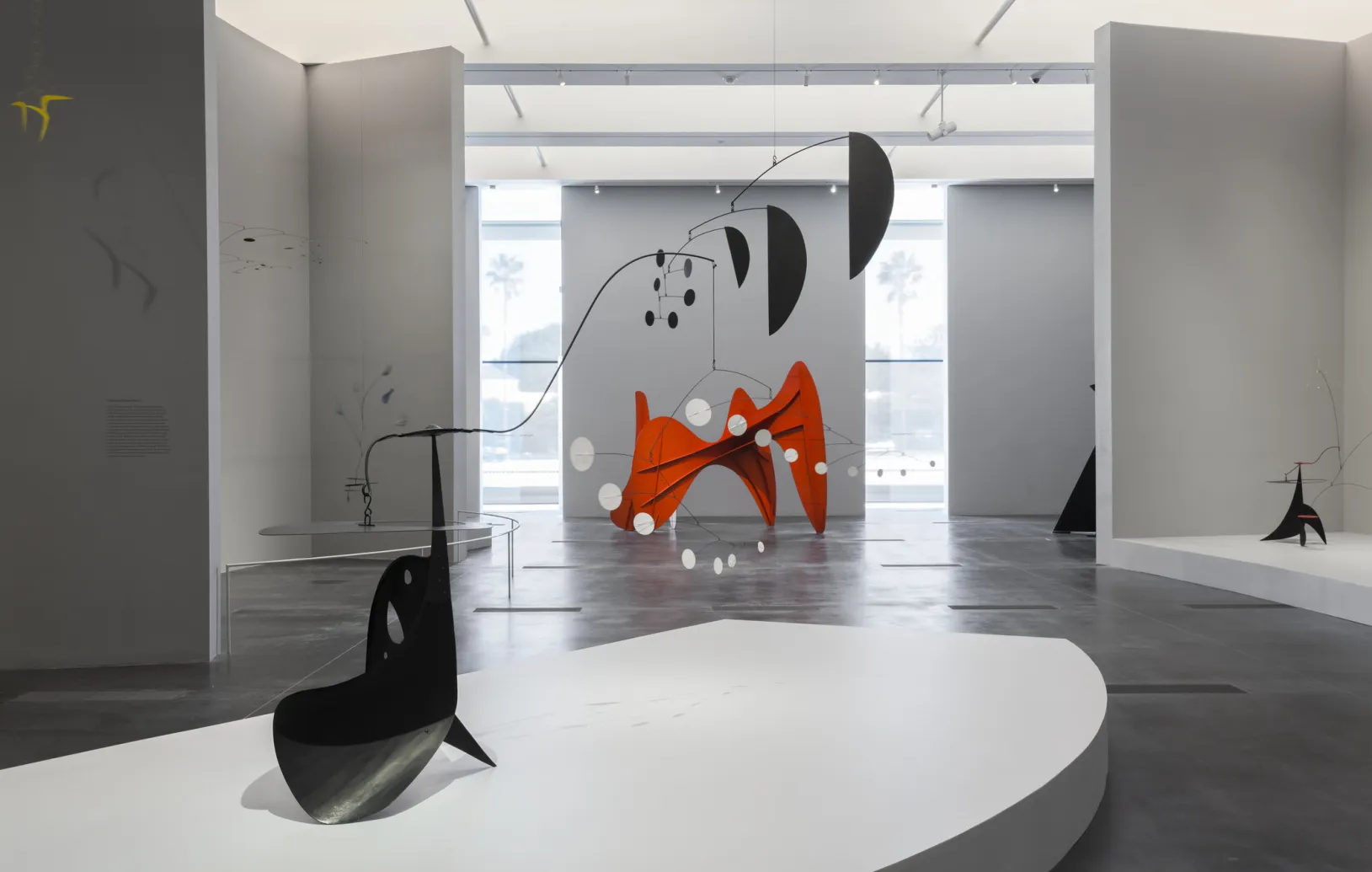
One of the most important artists of the twentieth century, Alexander Calder revolutionized modern sculpture. Calder and Abstraction: From Avant-Garde to Iconic, with significant cooperation from the Calder Foundation, explores the artist’s radical translation of French Surrealist vocabulary into American vernacular. His most iconic works, coined mobiles by Marcel Duchamp, are kinetic sculptures in which flat pieces of painted metal connected by wire move delicately in the air, propelled by motors or air currents. His later stabiles are monumental structures, whose arching forms and massive steel planes continue his engagement with dynamism and daring innovation. Although this will be his first museum exhibition in Los Angeles, Calder holds a significant place in LACMA’s history: the museum commissionedThree Quintains (Hello Girls) for its opening in 1965. The installation was designed by architect Frank O. Gehry.
Calder and Abstraction: From Avant-Garde to Iconic was organized by the Los Angeles County Museum of Art, in cooperation with the Calder Foundation, New York. Funding provided by LACMA's Art Museum Council and Phillips. This exhibition is supported by an indemnity from the Federal Council on the Arts and the Humanities.
Sponsored by: 
Incomplete - Links, Logo
Installation photograph, Calder and Abstraction: From Avant-Garde to Iconic, Los Angeles County Museum of Art, November 24, 2013–July 27, 2014, © 2014 Calder Foundation, New York, Artists Rights Society (ARS), NY, photo © 2014 Fredrik Nilsen
- Nov 24, 2013–Jul 27, 2014
- Resnick Pavilion
Calder and Abstraction: From Avant-Garde to Iconic was organized by the Los Angeles County Museum of Art, in cooperation with the Calder Foundation, New York. Funding provided by LACMA's Art Museum Council and Phillips. This exhibition is supported by an indemnity from the Federal Council on the Arts and the Humanities.
Sponsored by:
Incomplete - Links, Logo
Installation photograph, Calder and Abstraction: From Avant-Garde to Iconic, Los Angeles County Museum of Art, November 24, 2013–July 27, 2014, © 2014 Calder Foundation, New York, Artists Rights Society (ARS), NY, photo © 2014 Fredrik Nilsen