Tristan Duke explores the unlikely intersection of high-tech imaging, neutrino astronomy, and glaciology, using a technology he invented in his art practice—a camera with a lens made of ice—with the project Cold Cutting Edge.
Artist's Statement
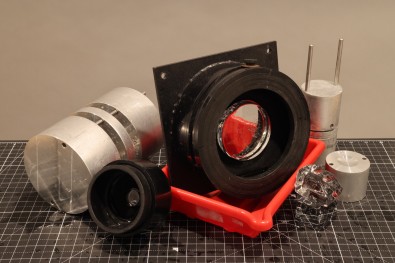
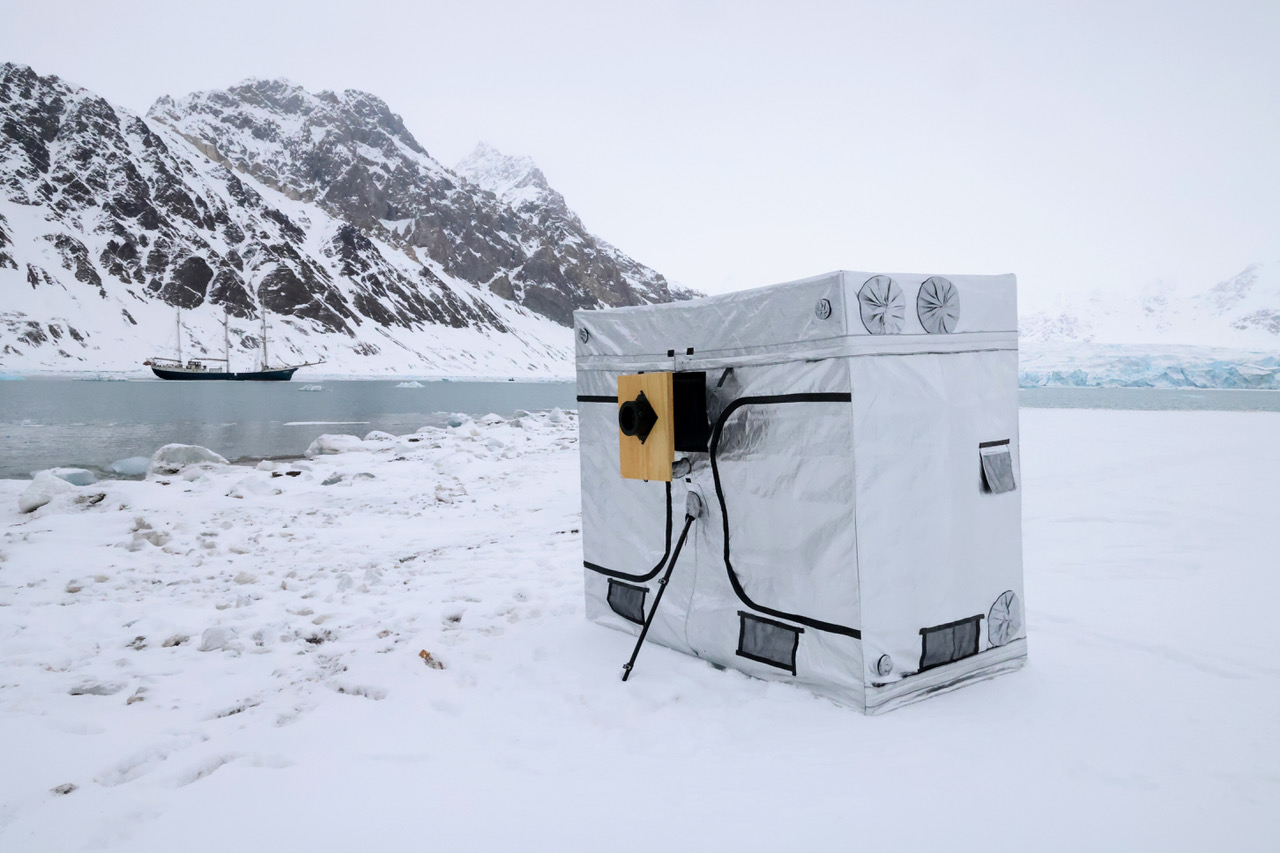
When I applied to the LACMA Art + Technology Lab, I had already begun my Glacial Optics project with an expedition to the Arctic, where I formed lenses from glacier ice. Using custom-built cameras, I used these ephemeral lenses to document melting glaciers. Since returning, I’ve turned my ice lenses toward a broader view—using them to confront climate change on a planetary scale, from megadroughts and wildfires to sea level rise and sites of energy production.
The LACMA Lab grant has deepened this investigation—exploring glacier ice as both a literal and poetic technology, a lens for understanding time, memory, and environmental transformation. Photography, at its core, is a time based medium. Glacial ice is too. And through this parallel, I became increasingly interested in the layered temporalities embedded in both.
The grant came at a perfect moment, catalyzing multiple threads in my practice. It enabled visits to ice core research labs, where I created a new body of work, Ice Core Studies—large-format photograms that image ancient cores with their internal strata and air bubbles, revealing the deep-time they contain.
The Lab also supported a residency at the Wisconsin headquarters of the IceCube Neutrino Observatory, where astrophysicists are using the Antarctic glacier itself as a detector to study cosmic neutrinos. There, I created work examining how glacier ice becomes a window to the cosmos—both literally and metaphorically.
Additional support from the Lab grant allowed for visits to the Ohio State University Pulsed Laser Holography Lab and the University of Wisconsin’s Computational Optics Group, where I explored how the speed of light intersects with glacial time. I also conducted archival research into John Muir’s early glacier measurements at the Yosemite Museum, returned to the Arctic island of Svalbard to present at the Scientific Committee on Antarctic Research, and documented the remote and highly restricted KSAT polar satellite station. I even dug into the little-known history of ice lenses themselves—a subject with surprisingly deep roots.
In short, this grant didn’t just support a single project—it expanded the scope and depth of my practice. It gave me the resources and freedom to explore how glacial ice can act as a lens through which to view time, climate, and the cosmos. The work it enabled continues to evolve, branching into new collaborations, technologies, and terrains. I’m still following where the gaze of the glacier leads.