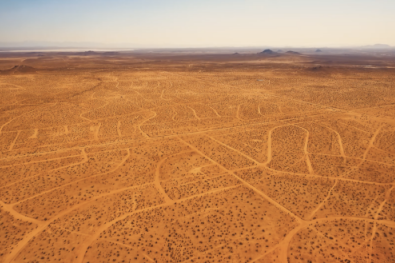
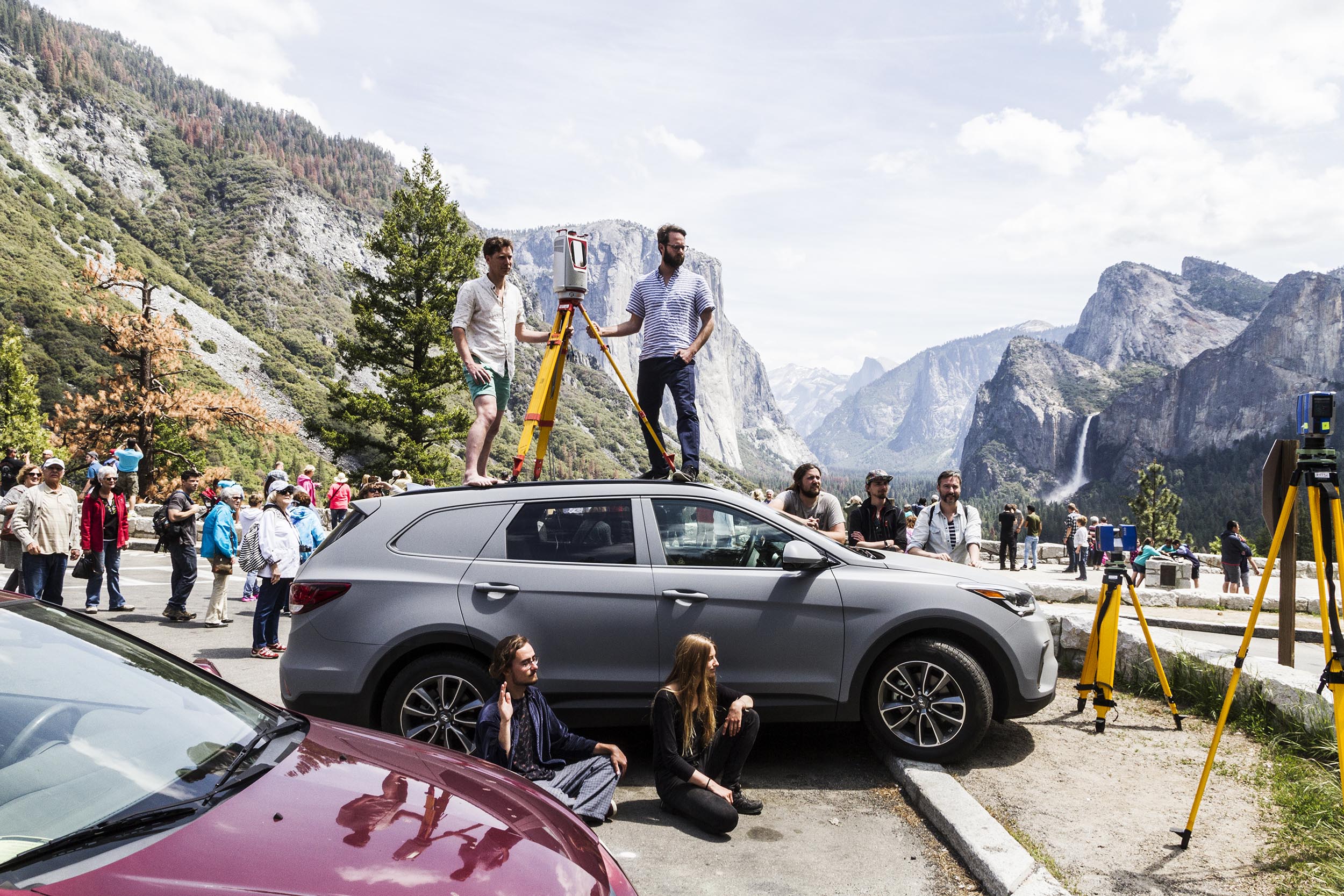
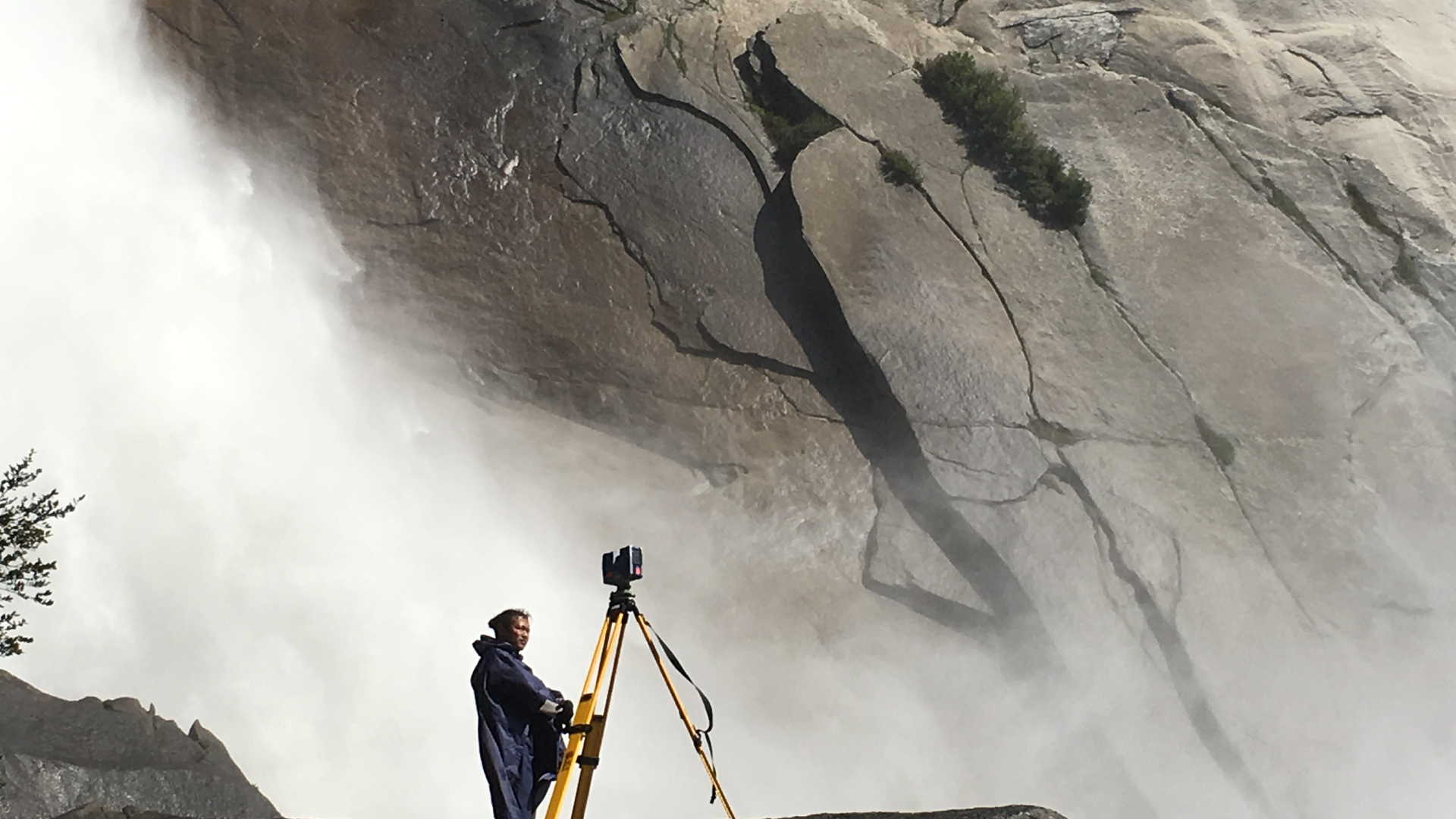
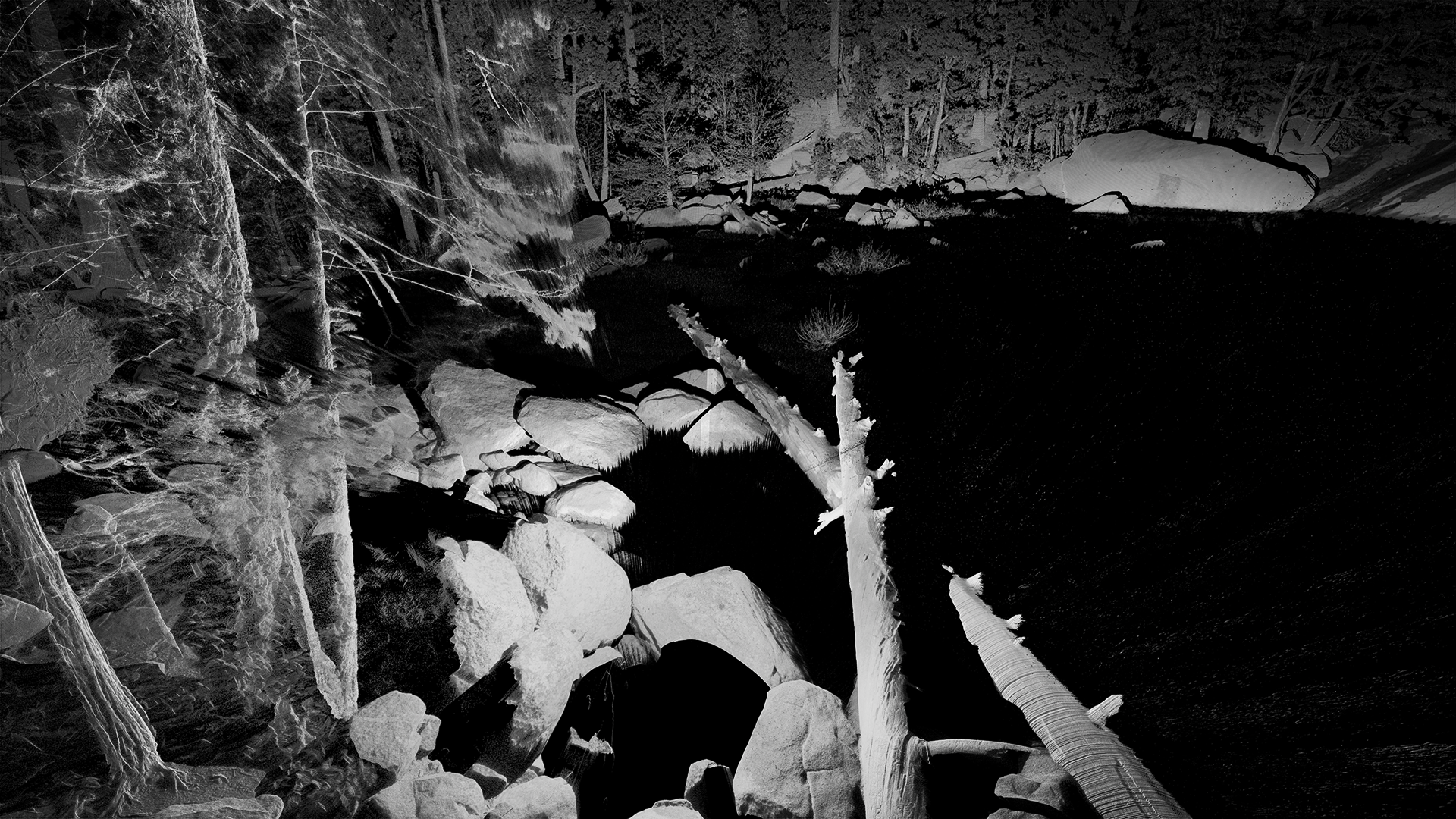
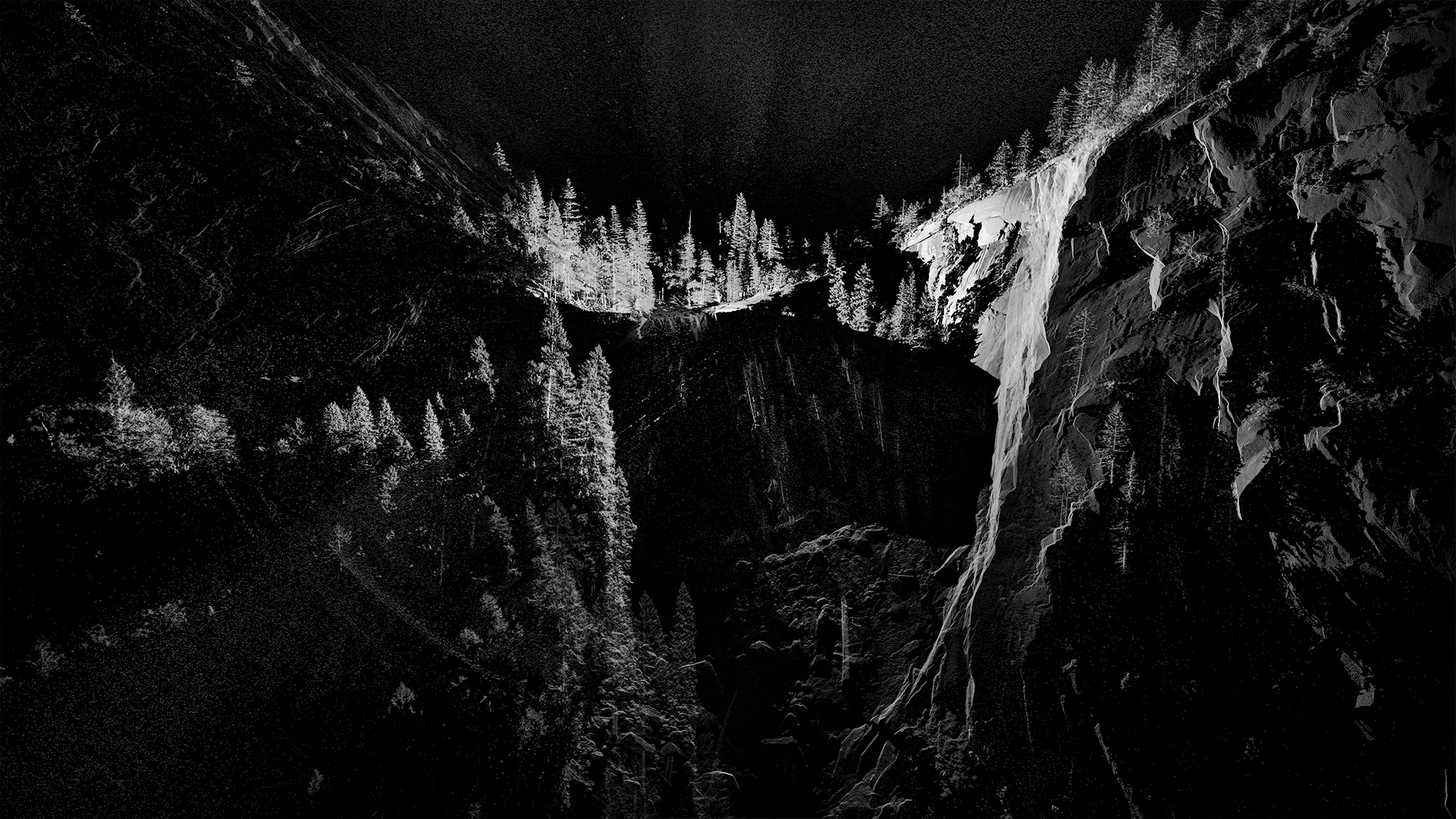
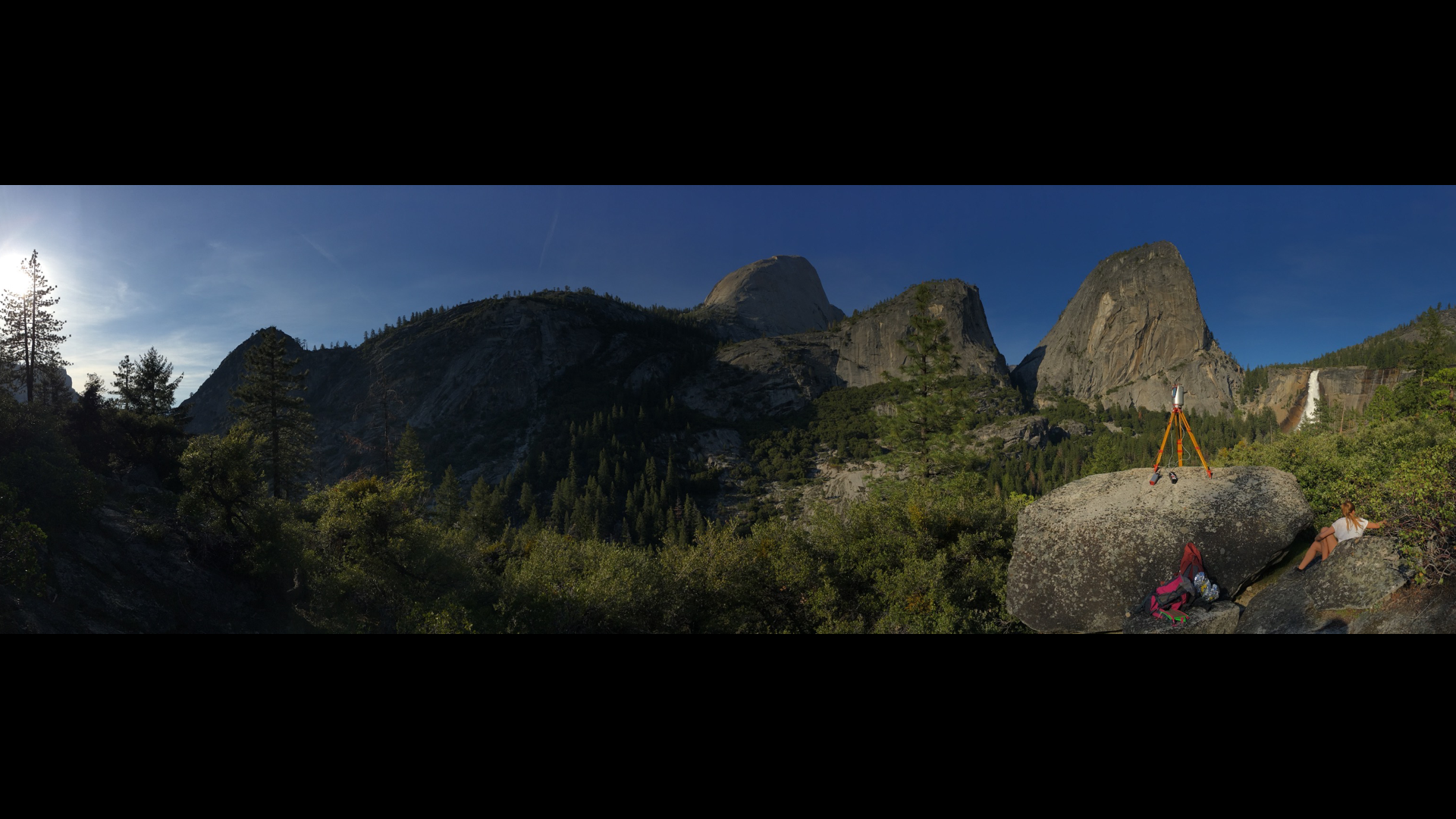
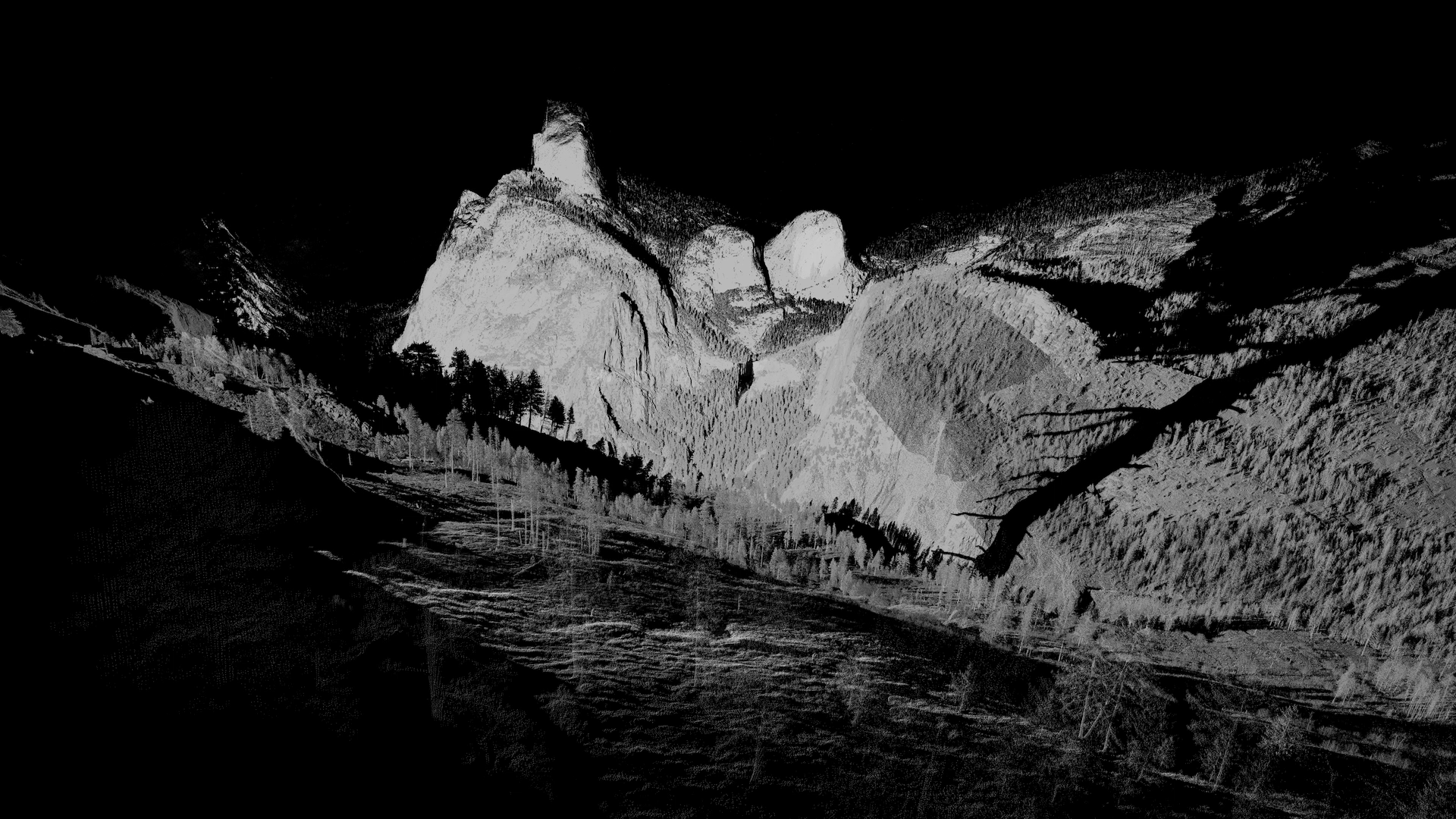
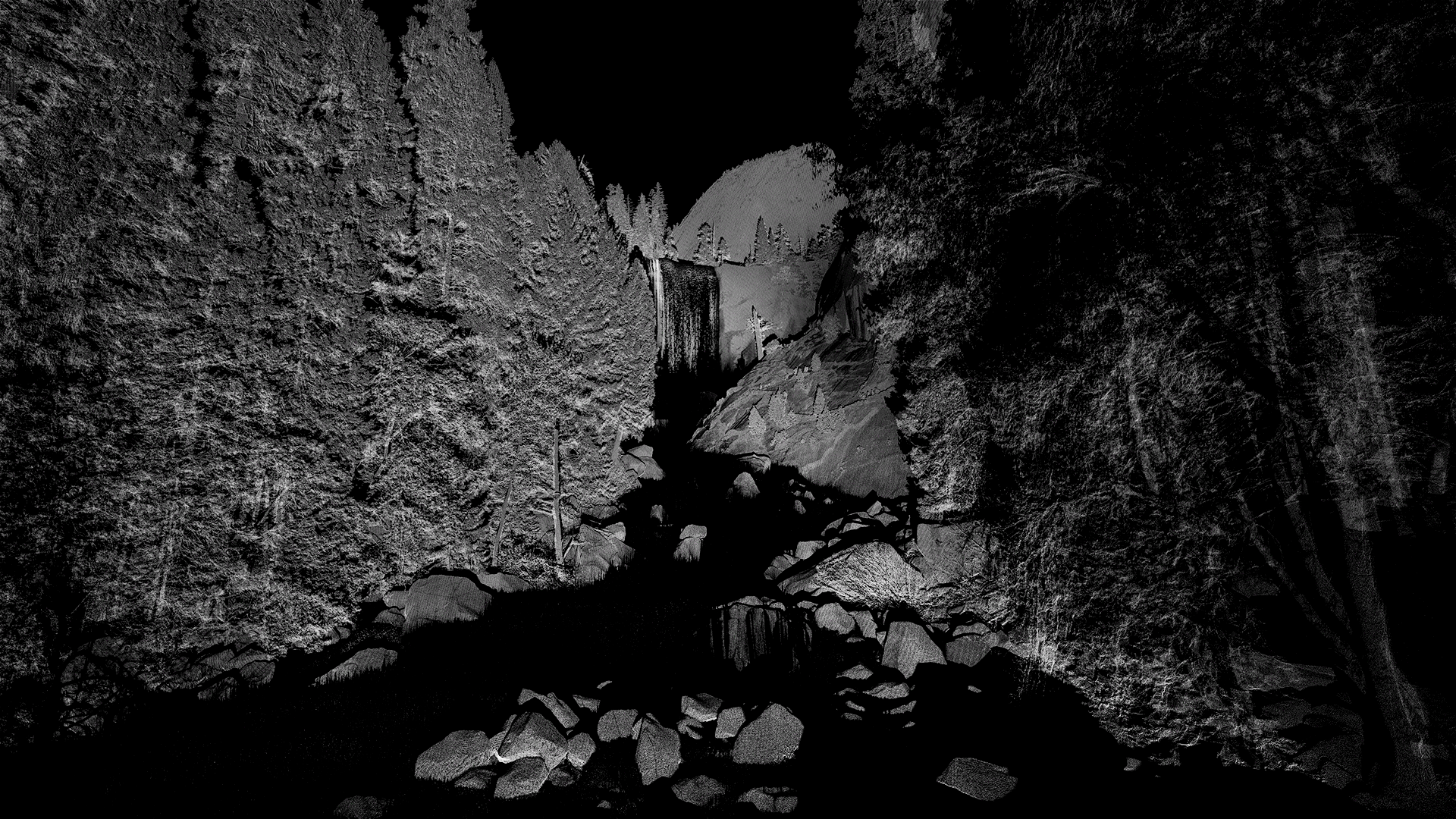
How does one reimagine a landscape that is one of the most-photographed locations in the world? In the spring of 2016, ScanLAB Projects set out to the Yosemite Valley with terrestrial laser scanners to find out. The artists captured over 150 scans of the iconic landscape, many taken from the same vantage points used by their photographer-predecessors Ansel Adams and Eadweard Muybridge. The expedition was not without its challenges, including the park’s vast scale and numerous waterfalls, which both pushed the scanning technology to its limit.
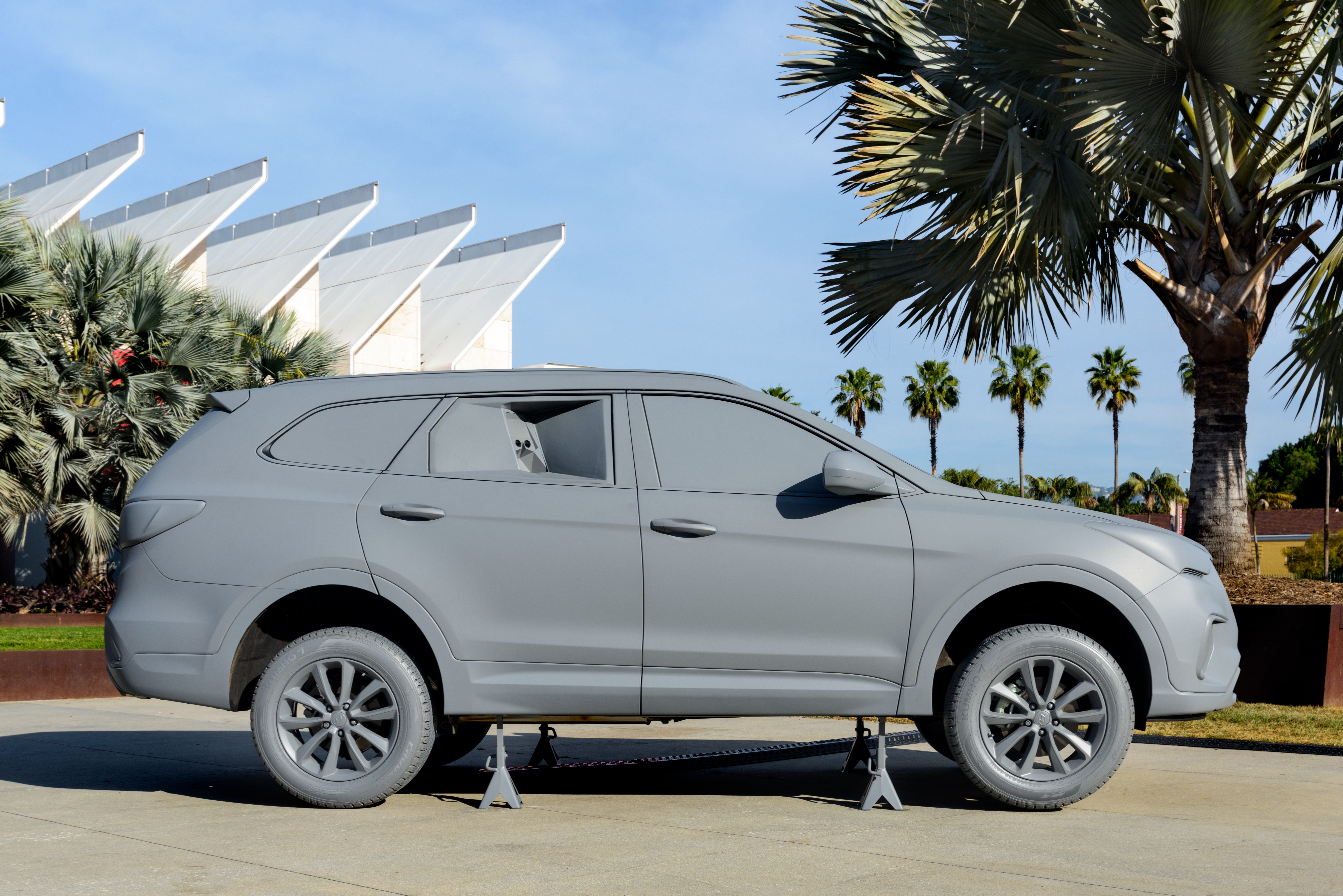
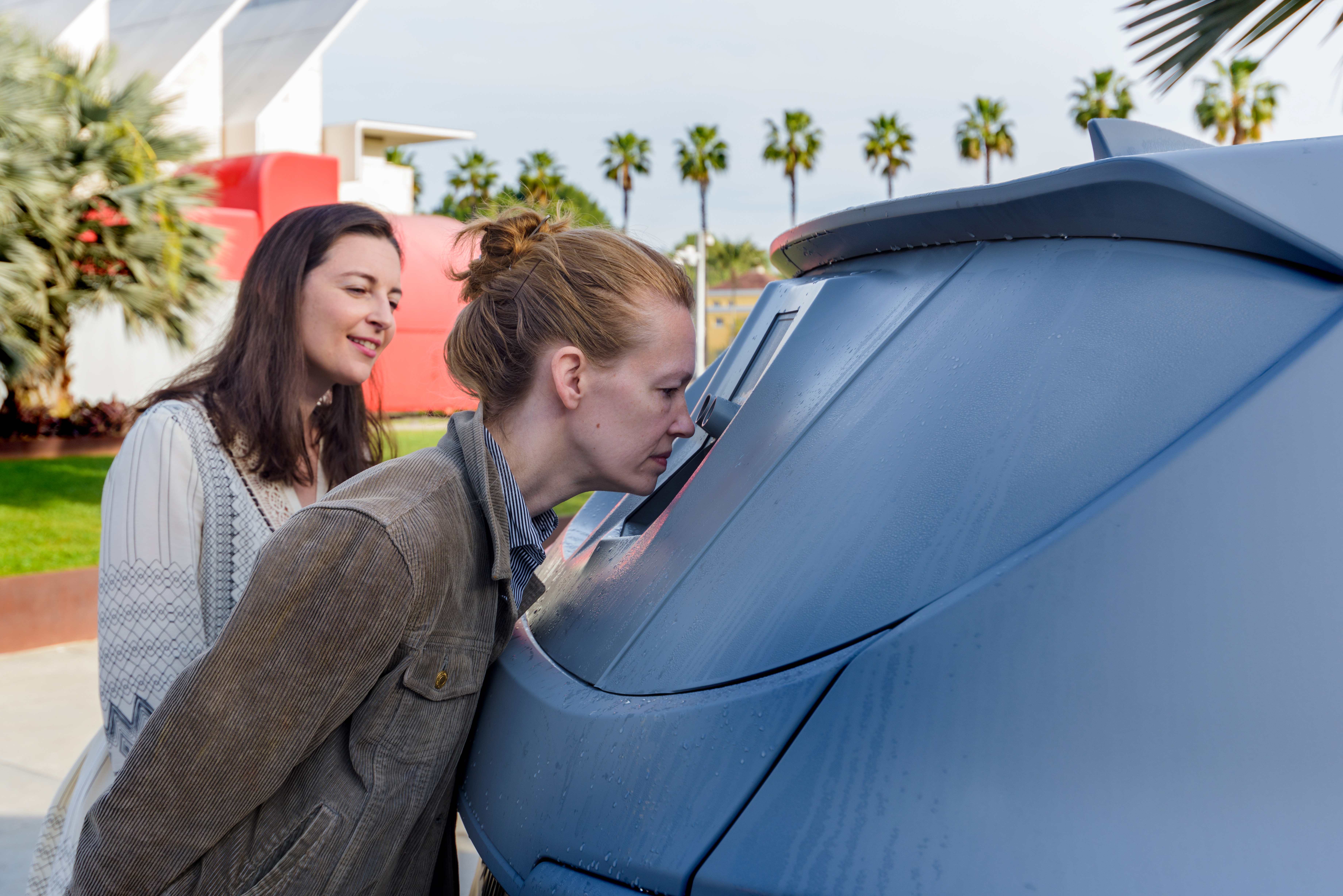
Hyundai, the Art + Technology Lab’s presenting sponsor, provided the expedition with a Santa Fe SE SUV. In a nod to the traveling studios of Adams and Muybridge—who frequently worked on-site and out of their vehicles—ScanLAB adapted theirs into a base of operations, where they could review and process their data. Displayed on LACMA’s Zev Yaroslavsky Plaza, the vehicle was again converted, this time into a digital diorama presenting a ghostly 3D landscape of one our most popular national parks.
Artist's Statement
Looking back at our work with LACMA’s Art + Technology LAB, what stands out is how it crystallized our artistic practice. We’ve always been driven by a fundamental desire to bear witness to landscapes through LiDAR and 3D scanning technology—creating works that exist at the intersection of artistic expression and scientific documentation. Our datasets and resulting artworks serve dual purposes: they captivate viewers while simultaneously contributing to scientific papers, climate activism, investigative journalism or dialogues about the history (and future) of photography.
LACMA’s support in 2016 did more than fund a project—it validated our commitment to ambitious, technology enabled expeditions and reflections in significant landscapes. Through our work, we invite viewers to perceive the world around them with renewed depth and perspective, seeing familiar places through the revelatory lens of emerging technologies.
The LAB empowered us to venture into uncharted creative territories that had previously existed only as ambitious concepts. We harbored a desire to immerse ourselves in America’s spectacular landscapes, with Yosemite emerging as our natural focus. The valley’s storied relationship with photography created a compelling historical parallel—we saw clear connections between the pioneering use of early photography and our experimental application of 3D scanning technology. Both represented technological innovations that transformed how humanity documents and interprets natural wonders.
Prior to the LAB, we had already established our practice in bearing witness to remarkable environments. We spent two months in the Arctic alongside Cambridge University researchers, scanning sea ice to build a catalog of crucial scientific data while simultaneously creating gallery installations featuring physical replicas of the same sea ice formations for London exhibitions. We had also recently returned from a collaboration with Forensic Architecture, which documented former concentration camps and the communities benefiting and in some cases suffering from their memorialization.
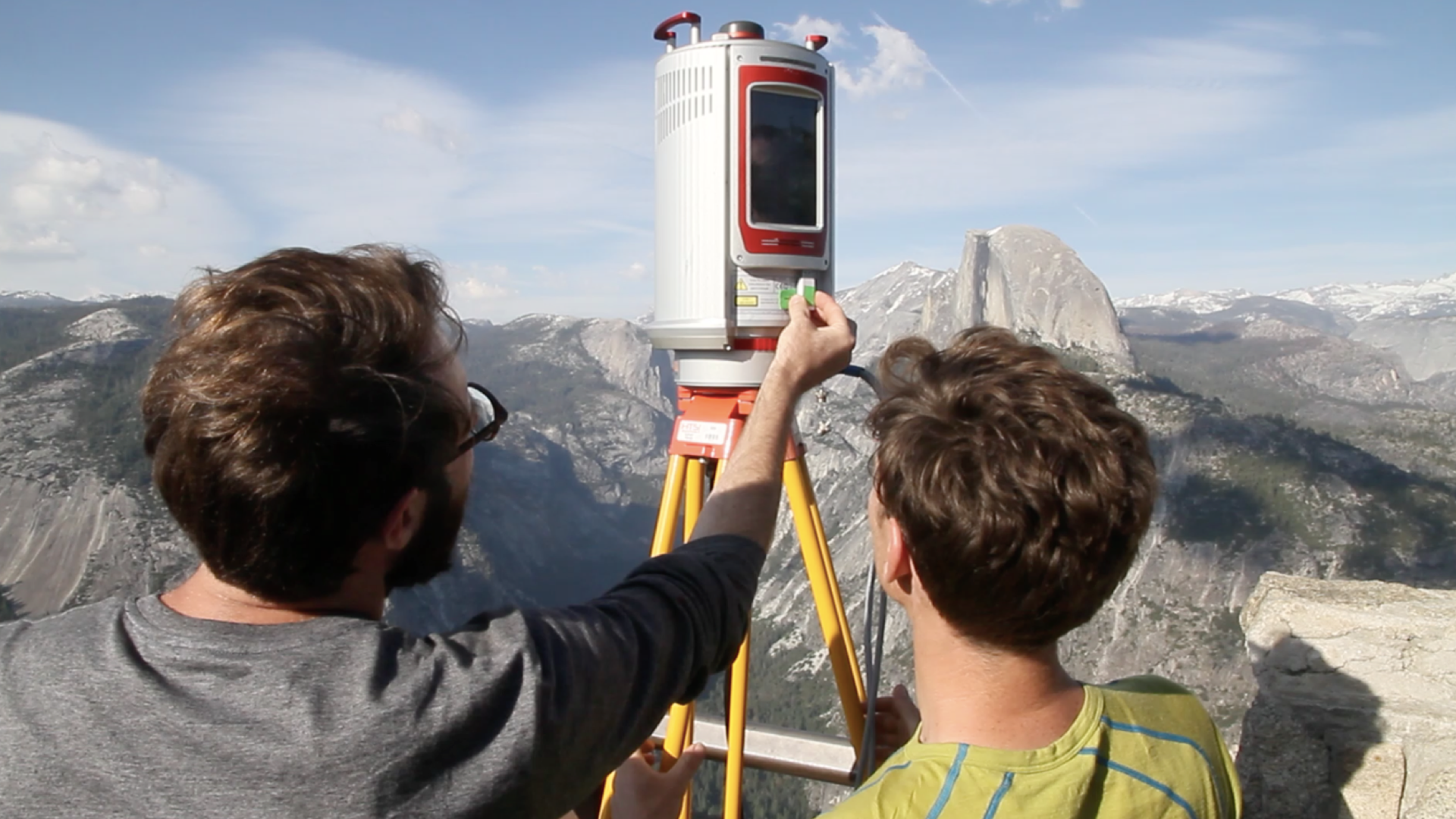
Our Yosemite expedition in Summer 2016 departed from conventional photographic documentation methods. Rather than cameras, we carried the latest terrestrial laser 3D scanning equipment into the valley. The culmination of this work—a high-fidelity 3D hologram of Yosemite Valley—was exhibited at LACMA in Spring 2017. Unusually for that time, we brought our entire interdisciplinary team to the field. Our practice thrives on the collaborative energy between architects, craftspeople, photographers, engineers, documentary filmmakers, and software developers. Having everyone on-site created an unprecedented opportunity for cross-disciplinary exchange in the presence of such an iconic landscape.
Traveling from London with hundreds of pounds (and thousands of Great British Pounds) of scanning equipment, we embarked on a two-week journey that would challenge us physically and creatively.
Each day brought new challenges and discoveries as we camped under the star-studded sky, cooked over open fires, and packed lunches for long days of trekking the trails. It meant we connected deeply as humans with the landscape we were recording digitally. Dawn would find us hiking to vantage points before the crowds arrived, lugging equipment up the trails in the cool morning air. Setting up a scan often meant positioning our equipment on precarious rocks or out on ledges with the best view of the valley and the river. And became an exercise in patience and hope—hope that the battery would last the whole way through, else the day’s hike and scan would have all been for nothing.
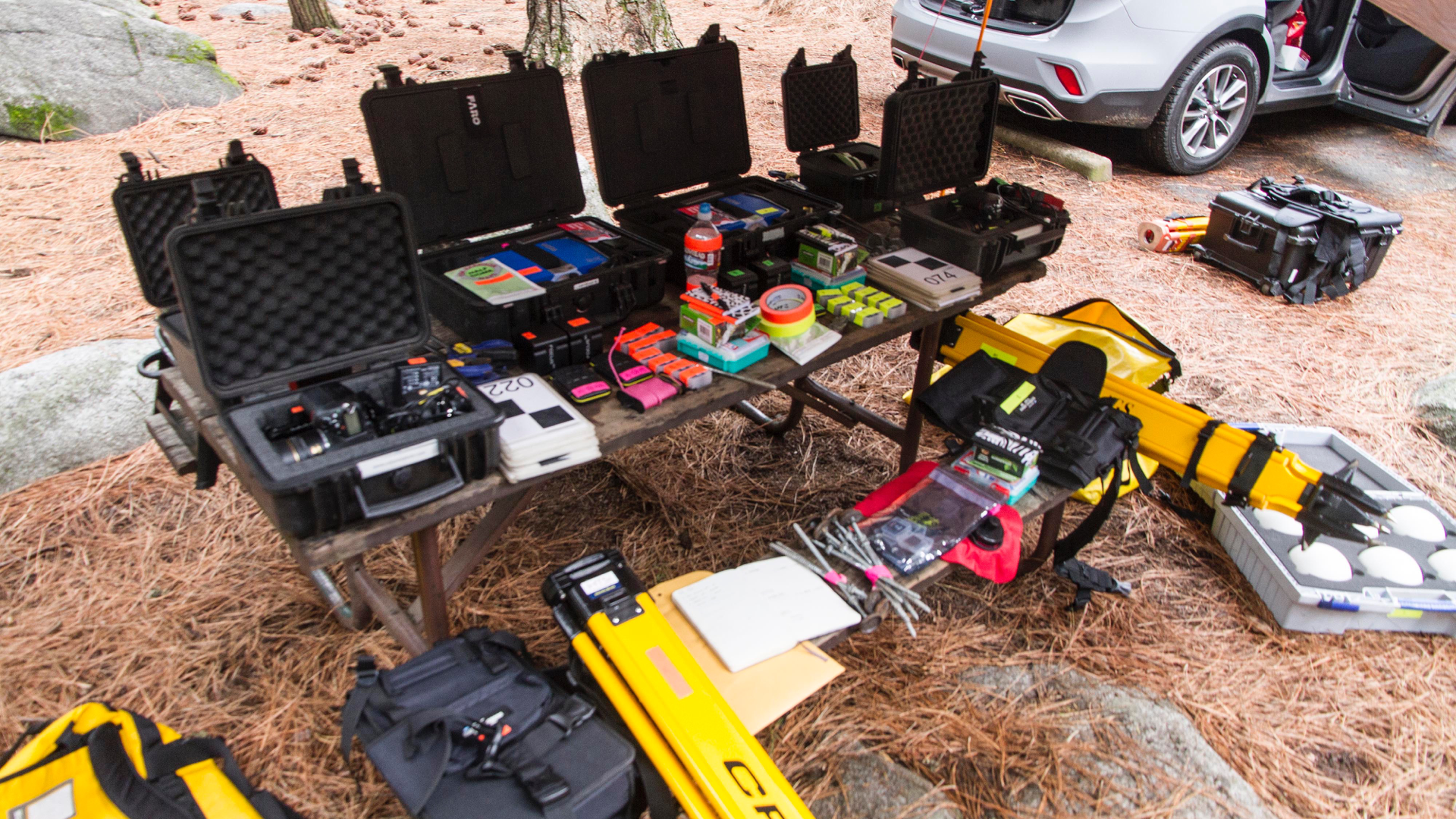
The technical challenges were constant and often required creative solutions. Our makeshift tech hub—a tent and boot of the car setup to protect against unexpected summer showers- or bears —became command central each evening
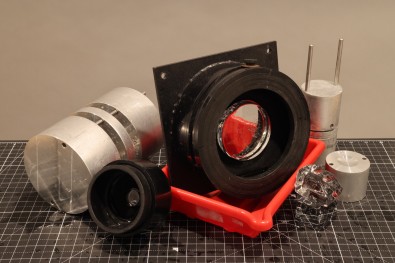
Children would ask if we were from NASA, while park rangers would stop to inquire about our project. When the weather turned, we retreated to the lodge; the looks from fellow hikers we got whilst charging our sci-fi looking scanners and cameras in the dining room were priceless.
One of the most valuable aspects of the Art + Technology Lab’s support was the freedom it afforded us to explore ideas openly and without constraint. This approach is increasingly rare, yet it’s crucial for genuine innovation and exploration.
The influence of the Art + Technology Lab’s initiatives continues to resonate deeply in our work, long after the completion of the initial project. The skills we developed, the perspectives we gained, and the creative boundaries we pushed have become foundational elements of our artistic approach.
We’ve since incorporated other emerging technologies into our practice, always with an eye towards how they can enhance our ability to record and share the inherent beauty or troubling realities of the world around us. We went on to build other bodies of work, like Dreamlife for Driverless Cars. An imagining of what might be going on in the minds of hundreds of thousands of autonomous vehicles of the future as they go about using some of the same machine vision technology as ScanLAB to navigate the city. What would this world look like? How might the design of our cities change to respond to this? And what would error in this world be like?
In recent years, we’ve developed a new body of work called FRAMERATE. This entirely new technology, which we created to observe landscapes in timelapse, represents a leap in how we perceive and record the world around us. Showcased in projects like ‘FRAMERATE: Pulse of the Earth’, (Venice Biennale 2022, SXSW, 2022) and ‘FRAMERATE: Rhythms Around Us’ (Tribeca, 2024) FRAMERATE utilizes thousands of daily 3D time-lapse scans to document landscapes and cityscapes as they shift through time.
FRAMERATE allows us to observe change on a scale impossible to see with traditional cameras or the naked eye, revealing the subtle rhythms and dramatic transformations of our environment. From the growth of a pumpkin in an English garden to the erosion of a seaside cliff, from urban commuters to grazing cattle, FRAMERATE documents it all with empirical precision. This isn’t just art for us; it’s also cutting-edge scientific research, offering measurable data about our changing world and we recently managed to get some of this published in NATURE.
FRAMERATE encourages and invites audiences to think and feel on different timescales—geological, seasonal, tidal. It allows us to see the beautiful, creative, and destructive forces of nature and humanity in a new light, deepening our understanding of the world around us and our place within it.
Ultimately, our experience with the Art + Technology Lab at LACMA has reinforced our belief in the power of art to change perspectives. Our work challenges the notion that technology and nature are at odds. Instead, we demonstrate how technology can be a tool for deepening our connection to the natural world, revealing details and perspectives that might otherwise go unnoticed.
In an era where digital experiences often dominate and the internet is increasingly flooded with generative AI and synthetic realities, our technologically-enhanced yet reality-based art serves as a reminder of the profound beauty and complexity of the physical world. We embrace our digital craftsmanship and commit to using our tools for investigation, precision, equity, sustainability and truth.