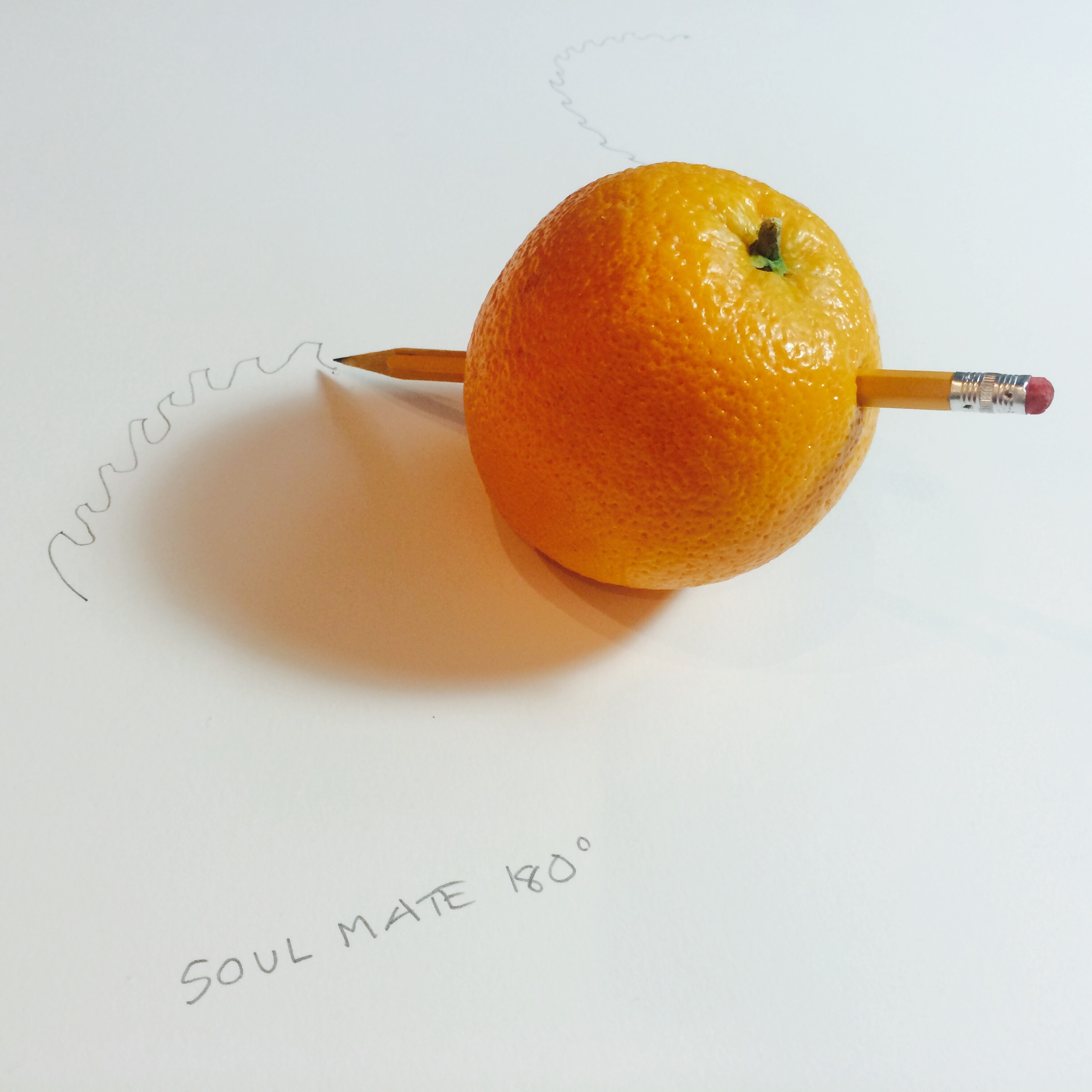
Massachusetts-based artist and writer Kirsten Mosher’s Soul Mate 180° (The Other Side is Here) (2019), presented at LACMA’s Broad Contemporary Art Museum, explored antipodes—the diametrically opposed points of the earth—as a metaphor for navigating cultural, political, and perceptual polarities. Researching LACMA’s antipode, located in the Indian Ocean, Mosher created a hand-carved marble sculpture of an imagined ocean wave using satellite and maritime data translated through traditional craft in India, emphasizing the dialogue between technological information and human experience. Accompanied by a short story installed nearby, in which the sculpture appears as a character, the project considered not only oppositional “sides” but also the complex spaces between and beyond them, suggesting the possibility of ambiguity and shared ground within apparent binaries.
Artist Statement
Along with Soul Mate 180°'s sculptural component, Mosher explored the project's ideas with prose. Written in the voice of the project’s protagonist, the text extends the work’s inquiry beyond geography, reflecting on the psychological and political spaces that exist between perceived opposites.
180° from Here
THE OCEAN IS WOOD. We ride sun-drenched orange and yellow waves. Swim in-line along the grain. Knots redirect currents. Time passes in rings. We reach nautical miles by tonguing and grooving. Intoxicated by the salty aroma of woody brine, we take breaks, drift.
Ears pressed against hollows, we pick-up forest stories told in maple, ash, oak, and pine. Rustlings of birch and beech, of past lightning scars; charred channels, burnt crests. Absorbing volumes, we re-route. This time, swimming against the grain.
We mistake an island of bark for land, and squeeze through its brackish tunnels, erratic paths charted by pulp-eating larvae. Submerged, we break through zones of punky fibers, dive deeper, then shoot back up. Our cells merge with the upward flow of xylem. We surface, squinting, gulping fresh air and spitting out sawdust.
Dark clouds join us. Rain pours onto the creaking sea, flooding the spaces between mounting swells. Planks roll and heave, throwing up nails, buckling, warping. We surf timber combers, then bail when they break. Ghosts of cracking masts and tangled branches scream from exposed chasms. Our cries for help — drowned by the din of splintered ocean.
THE OCEAN IS UPHOLSTERY, a couch. Its velvet pile turns aquamarine as the wind brushes against it. Pillows tossed atop an expanse of fabric, ripple and swell disappearing into an overcast horizon. Buttons skim the surface-fibers in schools. We watch, mesmerized as hundreds of iridescent discs with tiny holes for eyes gather in clusters, switch directions, and dive through cracks between the undulating cushions.
We flop, adjusting pillows as they rise and tumble. The velvet curves of couch-backs and armrests memorize the shapes of our bodies. Each time we roll over, wiggle our hips or kick-out our legs, we sink a little, until only our heads peer out from the dappled comfort zone. We drop down, lose each other. It’s hard to see through the cloudy foam filling. Bolsters shift in waves above us. We crawl through fathoms of feathers and fluff discovering gold coins, toast crumbs and lost keys buried deep within the crevasses. When dolphin clicks warn us away from a reef of coiled springs, we reach for the surface of padded seating.
THE OCEAN IS CONCRETE, a knee-skinning, sandpaper-rough expanse of sidewalks. Its surface, a sprawling grid of intersecting lines, longitude and latitude. Wind blows sandy pellets of baked froth off jagged crests. Cement dust stings our eyes. The din produced by tumbling rocks replaces conversation. Crumbles fill the dips between wave-walls.
Concrete rollers reinforced with rebar rise and fall, collapsing into themselves with the explosive noise of a demolition zone. Iron rods poke out from broken peaks. Ears ringing, we hoist ourselves up and over, scraping our shins. The sidewalk laps blood into its gritty grey skin, feeding scrappy grasses growing between the cracks. A fleet of pelicans flying overhead scan the pavement for prey.
The wind dies. The jagged ocean smoothes into a skatepark of epic dimensions. Concave and convex tunnels switch back and forth. We notice traces of black rubber ground into the down slope of a half-pipe. As the skid marks begin to accumulate, we opt to track the rogue skaters by the streaks and scuffs they’ve left behind. The rhythmic crashing of reverberating wheels leads the way.
THE OCEAN IS PROJECTION. One hundred and eighty degrees from here, ocean-wave data sourced from ships, aircraft, high-resolution radar, satellites, and buoys is collected, recorded and rendered into video files. Wind speed, wave height and wind direction—transform into a moving-image of the ocean surface.
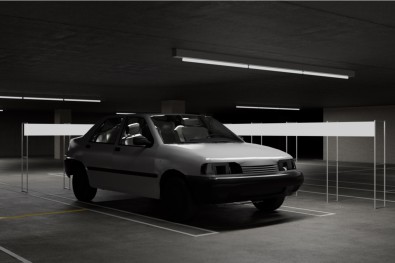
A point on an ocean from the other side of the world is live-streamed to us here in the city. The data generates an antipodal connection. Images of crests and wakes flicker across a parking lot. Shifting currents of light pan over our bodies, over our neighborhood. A dog yaps at the splatters of shadow climbing up our legs. We lose our footing. A veneer of rolling waves crosses over cars, up the sides of buildings, across lawns and houses. It floods everything in its path, re-contouring the landscape with every swell. We hold out our hands; lines of calligraphic crests slide between our fingers. The film washes over our faces as we look up.
The sky is filled with a dusty luminescence. A projector hums from its station high above us. We mistake its lens for a full moon. It beams a pulsing cone of light through miles of dark sky. The geometry of our city softens. The projection draws an illusion of depth so complete, we jump off roofs into a safety-net of salt water.
THE OCEAN IS MARBLE. A behemoth, its voyage-wide body stretches from one continent to another. Gusts hammer black barrel-waves, grind rose-colored rollers, rasp jade-green combers, shave blue breakers and creamy crests. Afterward, breezes polish cloud-white ripples, splashes and spray. Each day the sun sparks a blaze of blinding reflections.
Veined and slippery, the luminous rock breathes. We take its pulse. Lick its salty skin. Our bulges rest in its hollows. We drape ourselves over its crests, cool relief in the heat of the afternoon. It rolls over, exposing kaleidoscopic patterns formed by crystallized minerals. Sea-foam draws streaky patterns of gray and golden seaweed across its glossy white surface. We spend afternoons floating along its luminous spine and sliding down its rippling back. Eventually, we slip under.
Pockmarked with time, the ocean’s surface ages. Rough to the touch, its language, hard to read.