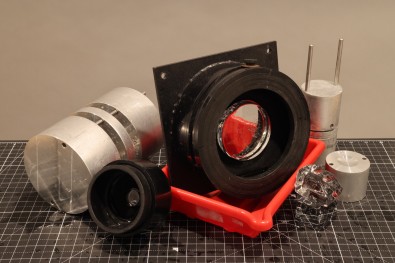
Curtis Tamm is conducting audio visual field-work in geologically active parts of the world to reevaluate the relationship between culture and natural catastrophes. The project researches the experiential and technological origins of the siren as a warning device and will develop new methods to sonify natural catastrophes in real time.
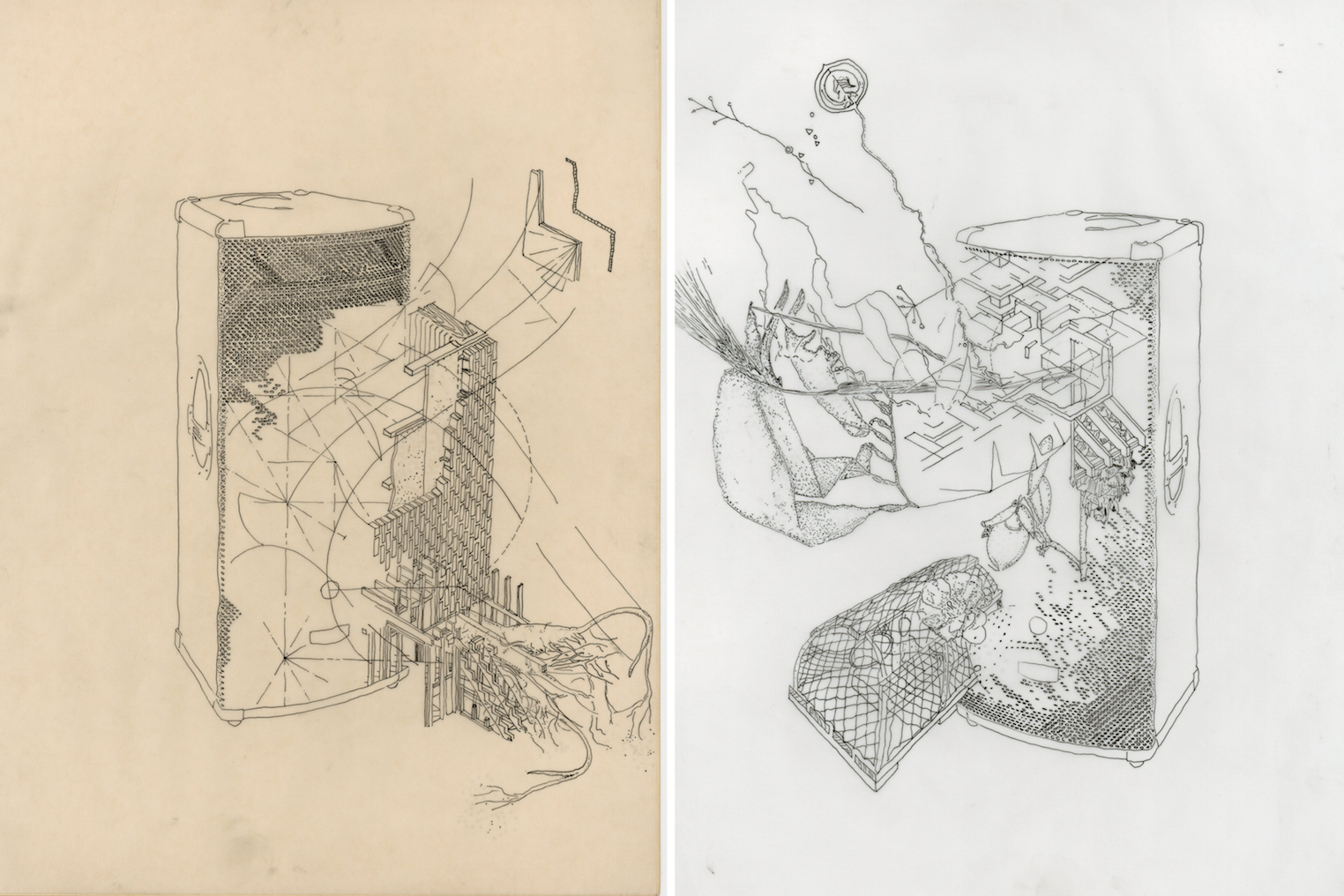
We sat down with Tamm to talk about his research and travels and learn why it may be worth rethinking the role of the aural warning siren in our lives today...
Artist's Statement
After the bombing of Pearl Harbor in 1941, hundreds of air-raid sirens were installed across Los Angeles as part of an early detection network designed to alert inhabitants of imminent attack on California’s shoreline. Of course the system was never officially activated, but it was, however, regularly tested. In fact, the sirens roared every last Friday of the month between 1942 up until 1986. For 44 years haunting tones swept through the streets of L.A. like anxious wraiths—proliferating holograms of an attack that never was.
As of 2025, many of the sirens still stand, though L.A. Public Works Department claims no one officially owns them any longer. Even though their sound has been nearly forgotten, the silence of those sirens speaks volumes about the use of simple sensory triggers to incept fear and alter our reality—even if under the context of a pragmatic simulation.
That we can be so easily puppeted by manufactured phantoms, such as those characterizing the political rhetoric of World War 2, and then subsequently, the Cold War, reveals something crucial about our civic theater—how the play is made, ab extra ad intra—and how the devilry of Nations colludes with fear to interface with our soul.
So strong was the effect of sirens on the zeitgeist that on numerous occasions the military reacted to their own false alarms, going as far as launching missiles at unseen submarines. A few civilians even died of heart failure from all the commotion—all bits of the backdrop, seen only in retrospect, tattered and falling away, sending actors and stage-hands clamoring to restore immersion.
Aside from developments in decibel power, tones of modern sirens have remained relatively unchanged since their invention in the late 1700’s. The iconic sound of police, fire, and ambulance vehicles, despite being entirely electronically generated, still imitate the acoustics of original, pneumatically-driven devices designed to reproduce ‘pure’ tone—that is, tones which can be replicated and studied by way of their periodicity and numerical value.
One of the first inventions to accomplish the feat was created by a conspiracy theorist named John Robison (1735–1805), whose air-driven horn used a stopcock to rapidly open and close a steam valve, thereby producing controllable tones with an assignable frequency. His was one of many inventions of this type, which arose (partly) from an obsession to artificially reproduce human speech.
Whereas the technology of sirens express fascination with the primeval ability to scream—making the human scream loudest of all—the siren myth is an intellectual and aesthetic refinement of our wonderment over the ability to sustain “vowels”; that mysterious set of noises separating man from beast, and for some, “proof” of humanity’s evolutionary ascension. But not all evolution is necessarily evolutionary progress.
The chimeric figure of the siren, as equal parts seduction and repulsion, neatly symbolizes a framework of species hierarchy. Widespread transcultural myths of sea-dwelling, supernatural entities whose honeyed music, transcendent and deathly, are enlightened reminders that even archaic minds intuited the progenitors of mammalian hearing—as being entirely formalized by the “wine-dark sea,” within the lateral organs of primordial vertebrates.
Those hard at work before the dawn of scientific materialism already understood what the fossil record would later confirm: that spines and ears have been spiraling into one another within a deep morphogenetic fugue, expressing their romance through humanity’s love affair with verticality, through which our hearing is made entirely possible.
If we could imagine sirens beyond a technological genealogy, we may find that they were being listened to long before John Robison’s clever invention. Why else would the Capital in ancient Rome, for example, have kept flocks of geese, who, as it was commonly understood, would announce imminent danger with their honking? Remember in 373 B.C, Diodorus wrote that five days before the earthquake which ruined the city of Helice, hordes of different animals such as snakes, weasels, centipedes, and worms migrated in droves, fleeing days before shocks descended upon the city. In Japan, earthquakes were (and are still) notoriously connected to catfish—specifically, the Lake Biwa catfish, who leapt up out of the lake in great numbers minutes before the Ansei Earthquake devastated the region in 1854. The event was later mythologized in the form of breathtaking woodblock prints, known as Namazu-e, which depict the catfish as a supernatural being, replete with grotesque human teeth, in a variety of satirical situations like asking forgiveness from townspeople or playing games of chance with other mystical characters.
Nyuki Yada, an engineer at Kanagawa Institute of Technology, was curious enough about Namazu-e to begin a multi-year investigation, studying the ability of other animal species to detect earthquakes before our sensors can. Working in a laboratory bustling with snakes, freely wandering cats and Lake Biwa catfish, Yadasan’s research has proven that foot traffic of his animals increases dramatically in the days leading up to earthquakes. Even three days before the Tohoku earthquake of 2011, their activity increased, illustrating a remarkable but as yet unexplained correlation.
Maybe it’s not a question of which comes first—catastrophe or culture (take your pick)—because they feed from one another. At a certain scale, catastrophe is a signal for the planet’s rhythms: a music through which we are given the opportunity to reflect upon worlds beyond our senses. Sometimes music can be violent, though in so being, our perspectives of deep-time frissons, deepening within our skeletal frame. Knowing this, how can we cultivate a relationship with the ecstatic vibration of emergencies as a set of mysterious and interrelating signals, moving across and in between perceptible entities, thoroughgoing and continuous, no matter how sequenced, striated, or discontinuous it may feel? How might we better leverage the absences and blind spots in our systems of knowledge toward greater intimacy with our animal friends? What do we have to offer in return?