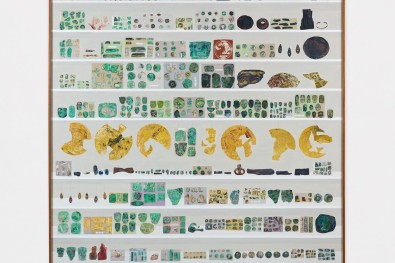
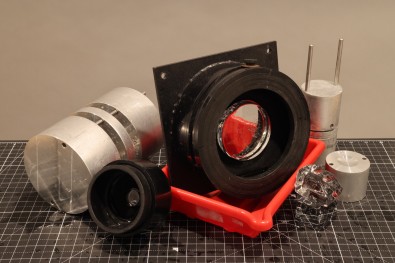
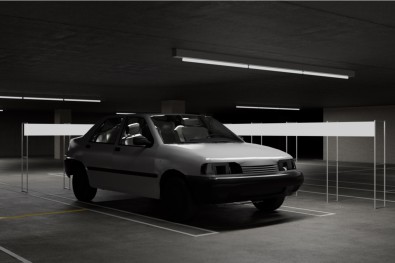
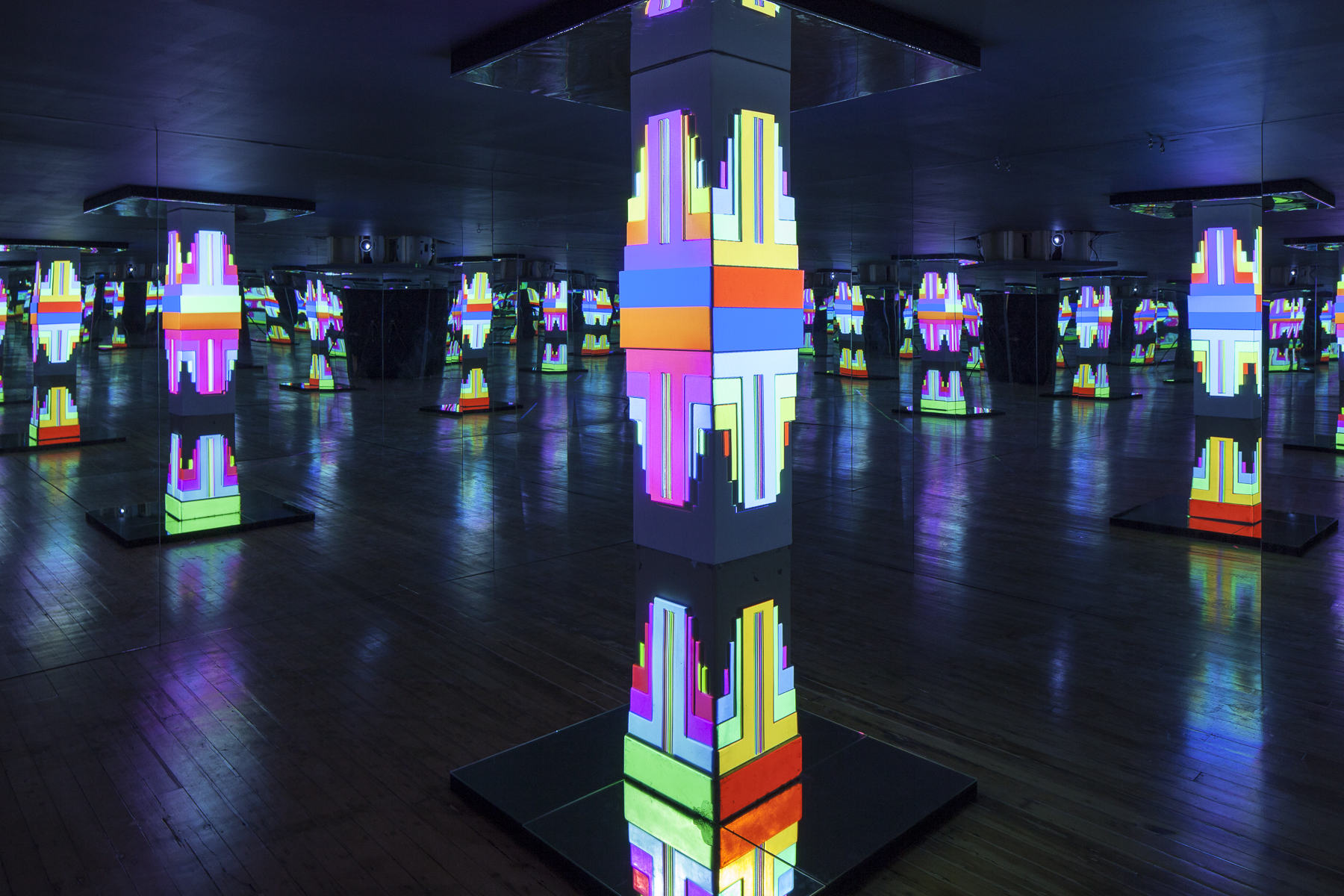
Cayetano Ferrer’s project, Object Prosthetics, is a series of case studies based on the exhibition of incomplete objects, using new technologies to create reconstructions and incorporating them into his artistic practice. These case studies will lead up to an artist intervention in LACMA’s permanent collection.
Artist's Statement
Object Prosthetics: Dismember/Re-member
To dismember: an act of the world upon a body, pulling apart a structure. To re-member: an act of mind, a pulling of scattered things back into the fold of thought. A powerful symmetry lies in the pairing. It suggests a natural law of psychic gravity, that for every act of fragmentation, there is an equal and opposite urge toward reconciliation. This impulse haunts a constellation of human enterprises: archaeology, assemblage, kintsugi, archival research, dream analysis and film editing. It’s a compelling fiction.
Nowhere is this fiction more concretely staged than in the museum: an engine for reassembling the world’s fragments. The work grouped under the title Object Prosthetics began as an inquiry into this process: tracing the violence on objects before they arrived in the collection, examining their subsequent repairs, and developing speculative prosthetic support systems that reject neutrality and engage tensions between fragments and their display systems. Under this umbrella, a sequence of works emerged from collection research, from Greek and Roman architectural fragments to conceptual restorations of exhibition spaces. Eventually, attention shifted from the objects themselves to the very architecture that housed them—a framework that was, itself, subject to fragmentation.
As a site, the Los Angeles County Museum of Art is an archive of fragmentation and a testament to the will to reconcile. The asphalt seeps the museum sits on, it turns out, have exceptional preservation chemistries, creating the largest known concentration of Ice Age fossils on earth. This condition of natural preservation was the impetus for the site’s cultural use when the original owner donated to the county. The building itself, then, has always been in dialogue with the act of recovery. In 2020, this dialogue became literal. The research developed into a choreographed dismemberment with the museum’s demolition team, a project titled Extraction. The goal was to salvage architectural elements of the William Pereira-designed campus before its destruction, preserving them for a future public setting, and highlight the transformation and decontextualization.
During this process, the architectural became anatomical. “They look so much like bones,” a colleague remarked, seeing the multi-ton fragments of the column resting in the studio. A sketch, unearthed in the Pereira archives at USC, revealed the building’s ghost: the original design for LACMA was for a “Museum of the La Brea Fossils,” conceived as a vessel for the very bones still being pulled from the ground. The concrete fragments were, in a sense, fulfilling a latent destiny, becoming the monumental fossils of a modernist era, extracted from the same historical soil.
This web of connections—architectural, institutional, geological—feels resonant, almost fated. And yet, the initial symmetry that seemed to promise a key—re-member, dismember—is itself an artful reconstruction. The words share no root. One comes from the Latin meminī, to be mindful; the other from membrum, a limb. Their connection is a phantom limb, a fiction we project onto the language to make sense of a rupture. Perhaps all restoration is like this: an act of imposing a desired coherence, of inventing a memory for a thing that can no longer speak for itself. The prosthetic—whether a sculptural infill, a display mount, or a linguistic pairing—is never neutral; it is an authorial act. The purpose is not to create a perfect whole, but to make the seams of this fiction visible, to let the prosthesis announce itself.